by Sherri Sylvester | Apr 14, 2016

We are talking about quilting on this last Sewing Diary entry. As most of you know, this blog doesn’t talk about quilting as much as I’d like it to! I’ve got grand plans for at least 7 different stacks of coordinated fabric in my stash – and those are only the ones I can think of off the top of my head! Of course, my first love is quick projects and apparel. But I have actually finished the occasional quilt, and will always own a machine with the capability to make quilted projects.
Today I’m sharing tips I’ve found helpful as I learn about piecing and quilting, link to some great quilty tutorials and I’m even going to share a potentially embarrassing mug rug I made. Yikes – taking “professional” photos of something I’m not terribly proud of is hard! #perfectionisoverrated?
Before we head into the post, here’s a re-cap of the Sewing Diaries posts, since, amazingly we are already at week 6 of 6! Each post covers a different topic, by the end you should now know your sewing machine inside and out! Plus I hope you’ve found a few tips and tricks on how to make it sew what you want like a pro.
Week 1: Unboxing Your New Machine Part 1/Part 2 ~ Week 2: Closures ~ Week 3: Heavy/Uncommon Fabrics~ Week 4: Knits (without a serger!) ~ Week 5: Embellishing your Projects (ie. Stitches and Machine Feet) ~ Week 6: Quilting/Piecing (today’s post!)
Disclaimer: A Skyline S7 has been loaned to me for the purpose of writing this series. As with all products I write about, I will always tell you my own honest opinion. I purchased and loved Janome machines long before they contacted me. Janome has not asked me to qualify my opinions in any way. Also, the fabric for this post was given to me by Fabric Spark. Thank you for supporting my sponsors!
Today’s main project is “the Herringbone Runner” – a table runner pattern from Carolyn Friedlander – in Carolyn Friedlander-designed fabric no less! The selection of fabrics are from her last few collections and were provided by my lovely sponsor, Fabric Spark. They have also put together kits for this runner so you can make one too! Her well-curated collection is always amazing to browse through, I know you’ll find something you love.
These fabrics play so well together and I’m really pleased with how the table runner turned out. It was a surprisingly fast project – about 6-7 hours. Four of those for the paper piecing alone, but not because it was hard, but because I was thinking way too much about making sure the colours were evenly distributed. My brain likes everything to be super symmetrical, so this was a stretch for me! The pattern includes a really great explanation of how to paper-piece and I love how precise the final product is.
This leads to my first quilting tip: Remember, sewing is your hobby. If it’s not fun, don’t do it! Don’t get hung up worrying about quilt police. Make something you love, following the way you want to do it and it will be perfect! Of course, like anything, if you want to be more knowledgeable about how to do your hobby that’s ok too. Here’s a great article I love from Sew Mama Sew about keeping your hobby fun.
Keeping all of this in mind, here are some important things you should know when learning about how your sewing machine handles piecing and quilting.
Check out your Feet:
Piecing a quilt can be done on any machine but you will need at least one type of special machine foot to quilt a project on your sewing machine. Take a look at the feet that came with your machine. If they are specific to quilting, look them up in the manual. Find out what they do so when you come across quilting lingo you know what it’s talking about!
The Skyline S7 is great for quilters with lots of extras including the AcuFeed Flex, several Free Motion Quilting Feet and a 1/4″ Piecing Foot. I have found that even basic Janome machines (my first SUV1122!) tend to come with an included Walking/Even foot, which is a huge bonus for beginners.
If you happen to have a Dual Feed option like the Skyline S7’s AcuFeed Flex (more about this foot in the Sewing Diaries: Week 4) or an Even/Walking Foot count yourself lucky! These feet are the key to producing an evenly sewn and quilted project. They move the top and bottom fabrics together, keeping all of the layers in line. When quilting, this lets you move the fabric around without accidentally creating sewing wrinkles in the unseen underneath layer.
Check your Tension:
Tension is especially important when quilting your pieced project because a layer of batting adds a lot of extra thickness. If you are using different spool and bobbin colours, it is especially important that the tension is set properly. The two threads need to cross in the middle of the quilt layers so they don’t show on the other side. I used cream bobbin thread to match the backing and multiple colours to match the top and the Skyline S7’s automatic tension did a great job. Find out about adjusting your tension in the Sewing Diaries: Week 3.
Have a perfect seam:
Find out how to sew with a super-precise 1/4″ seam allowance. This is so important! Without a precise seam you will not be able to follow most quilt patterns. A piecing foot comes in really handy for making sure you sew your seams accurately. The Sewing Loft has provided a great article about how to simply find your machine’s perfect 1/4″ seam.
Basting your Quilt:
I still find it tricky to figure out how to get large quilt layers straight and basted before quilting them. Generations Quilt Patterns has some great detailed information on how to
Successfully Layer and Pin Baste Your Quilt. Of course if you don’t mind watching for the quilt police and your project is smaller you can use straight pins. I have had good luck doing this and am too cheap (
so far) to buy curved quilting pins to make the process easier.
Machine Quilting
I generally tend to default to straight line quilting in my projects, just because it is simple and easy to do. Plus, there is little to no learning curve, which helps! Mark straight line on your project, attach a Dual Feed or Walking Foot and start sewing. If your machine happens to have a quilting guide bar attachment, even better. Mark one line on the quilt and follow your seams with the guide bar to continue sewing evenly placed lines. I used it on my table runner to help follow the herringbone lines with my quilting.
I also tried out the included knee bar while quilting as well. It’s works so well it’s disappointing that I sew standing up and can’t really use it properly. You would have laughed! I’m balanced on a bar-stool with my knee in the air working the thing. Great for my abs, though! And so easy to turn pivot at corners, move the bar to the right to lift the presser foot, turn the quilt, let go to release it and lower the foot again.
Free Motion Quilting
Here’s where I “show off” my lovely mug rug.
As you can see free motion is not as yet a skill I pull off easily! It does take practice, and the nice thing about the Skyline S7 is that it sets everything up automatically so a lot of the guess-work is taken out of the process.
Sew Mama Sew has some great Tips on Beginner Free Motion Quilting. One thing I’ve read that is not included in their list is to practice with a pencil and paper. I’ve found this really helpful when figuring out how to get the shape you want. Practice putting your pencil down on the paper and don’t lift it until the shape is finished, just like when your quilt is in the machine!
Clasp Stitches
I used a few of these automatic stitches on my mug rug to try them out. It’s like tying a quilt, only by machine. I can see this being really cute and a great alternative to all-over quilting. I like the star shape best, but couldn’t resist adding a snowflake or 3 since our “springy” April has been full of them!
Bind your project:
Ideally it is best to hand sew your quilt binding. And it does look nicer – but I usually don’t want to take the time to do it, so I machine bind my projects. So far I’ve been happy with the results, but I can see it being really relaxing to sit and hand-bind a quilt. I always use
Cluck Cluck Sew’s Machine Binding tutorial. It is well explained and easy to follow.
I hope you have enjoyed the Janome Sewing Diaries series! I have (of course) been spoiled rotten using the amazing Janome SKyline S7. It really is a fantastic machine. Great for advanced sewers and beginners alike. If you have any questions about your machine, please let me know and I’d be happy to help find answers for you!
Happy Sewing!
by Sherri Sylvester | Mar 15, 2016
My husband and I differ in the amount of closet space we need. Here’s a quick run-down.
Every time I purge my “half” of the closet and get rid of clothing, it results in my husband appropriating the extra space for himself. I am starting to wonder if leaving piles of decoy clothing around would be helpful in case I ever need more space!
The thing that I don’t understand is that a disproportionate amount of those clothes are graphic tees, sports t-shirts, jerseys or free tees from things like wing eating challenges. Things he’s not ever going to give up, but also does not really wear. Ack! They sit there, taking up space – and more importantly, being messy – since other wearable tees are mixed in with them. Not that I’m a perfectionist or anything – but I love me a tidy closet!
Thankfully, I was able to convince him we were able to compromise and he let me chop some of them up into a t-shirt quilt. #ifyoucantbeatthem #jointhem We managed to pare the pile down by 20 tees. That’s 14″ less clothing piled on our shelves (I know, because I just measured a stack.) Makes me feel even better about this project. But, of course, it’s been almost 2 years since I took these photos and we’ve accumulated a full closet again. Turns out I should have made him king-sized quilt instead of only a twin!
If you might possibly have the same shared-closet predicament in your family dynamics *ahem-yes?* I would recommend that this is definitely the way to go! It’s been our go-to downstairs basement blanket ever since it was finished. I think maybe it was my first ever “real” quilt finish. At least, it is the first-quilt I am most proud of. The photoshoot was fun too. There’s a great park in Oakville by the waterfront that has these amazing life-size moose and wolf statues. #verymanly for our manly t-shirt quilt!
I think I started this project almost 4 years ago now. I found a nice t-shirt quilt tutorial on Goose Tracks Quilts. It is simple, without drawings or photos, and well written. Right down to a link to finding your fabric yardage. The design is a straight-forward and beginner friendly t-shirt quilt with same-sized blocks and simple sashing. Appealing to my sense of symmetry and order! I pieced a few of the blocks together to include the front and back of the tee together. And added in some important patches on the back.
The hardest part about this quilt was quilting it on my old budget basic machine. My non-quilty self decided to use a heavy blanket for the batting and my husband wanted to back it in baby-wale corduroy “that reminded him of a Scottish tartan”. Add the weight of the tee’s, and the interfacing you need to keep them from stretching. It’s a wonder my arms didnt’ fall off! Right – and then after that I pieced the t-shirt leftovers together for binding… *oof* #novicequilter!
In the end, the heaviness is so nice to cozy up under, And I’m glad we got to keep some fun memory t-shirts mixed in with the crazy graphic tee’s. His U2 concert tees, designs he made for work and shirts we designed and inkjet ironed-on. Oh, and one of the five epic basketball jersey we naively decided to double-layer applique lettering on for a basketball tournament (What was I thinking? Well, we were dating… Moving on!) Now these memories are preserved as a quilt we use almost everyday. I should probably add a label.
I wanna know! What has been your favorite quilt project?
Disclaimer: My inadvertent throwing Matt under the bus has been fully approved by the spouse in question. 🙂
by Sherri Sylvester | Jan 15, 2016
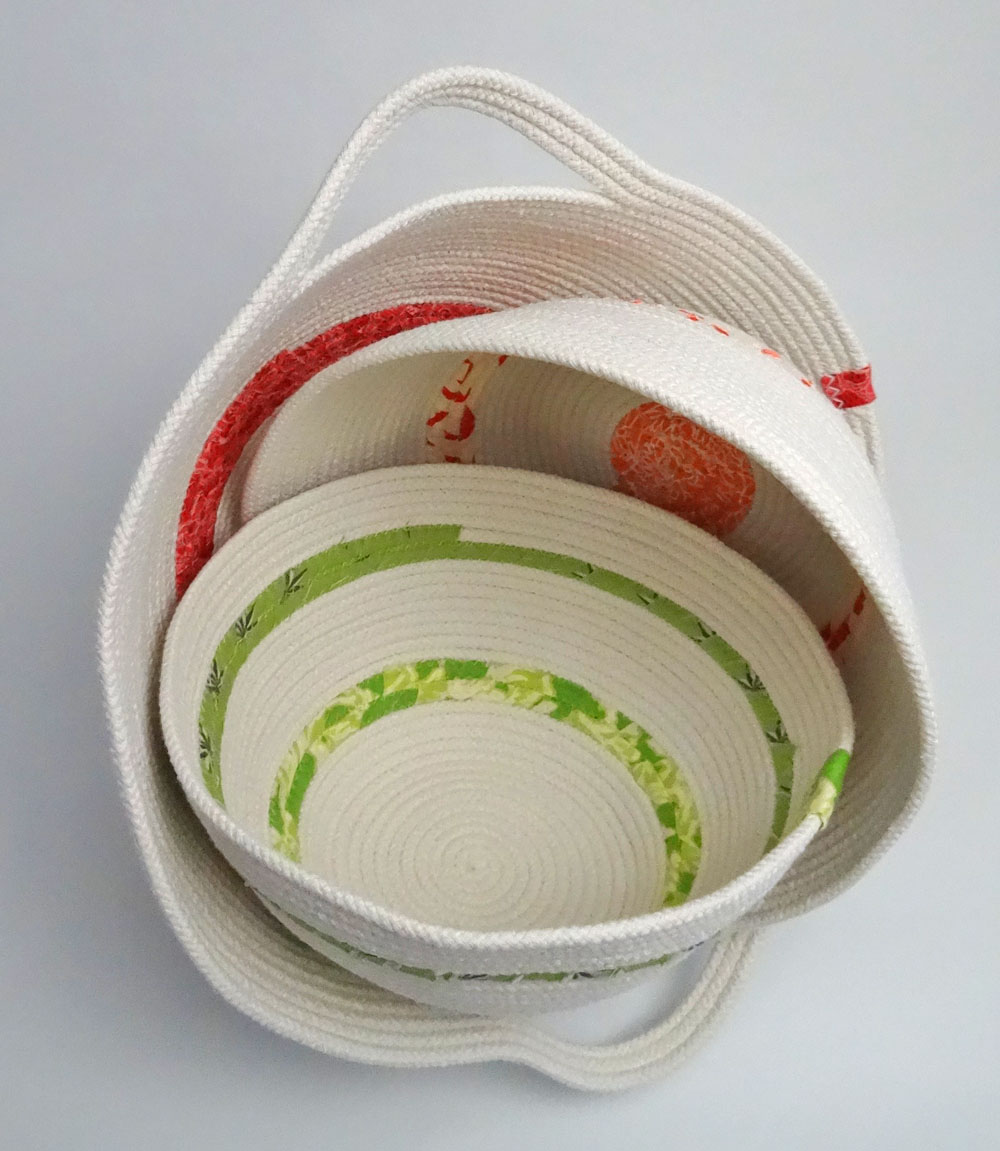
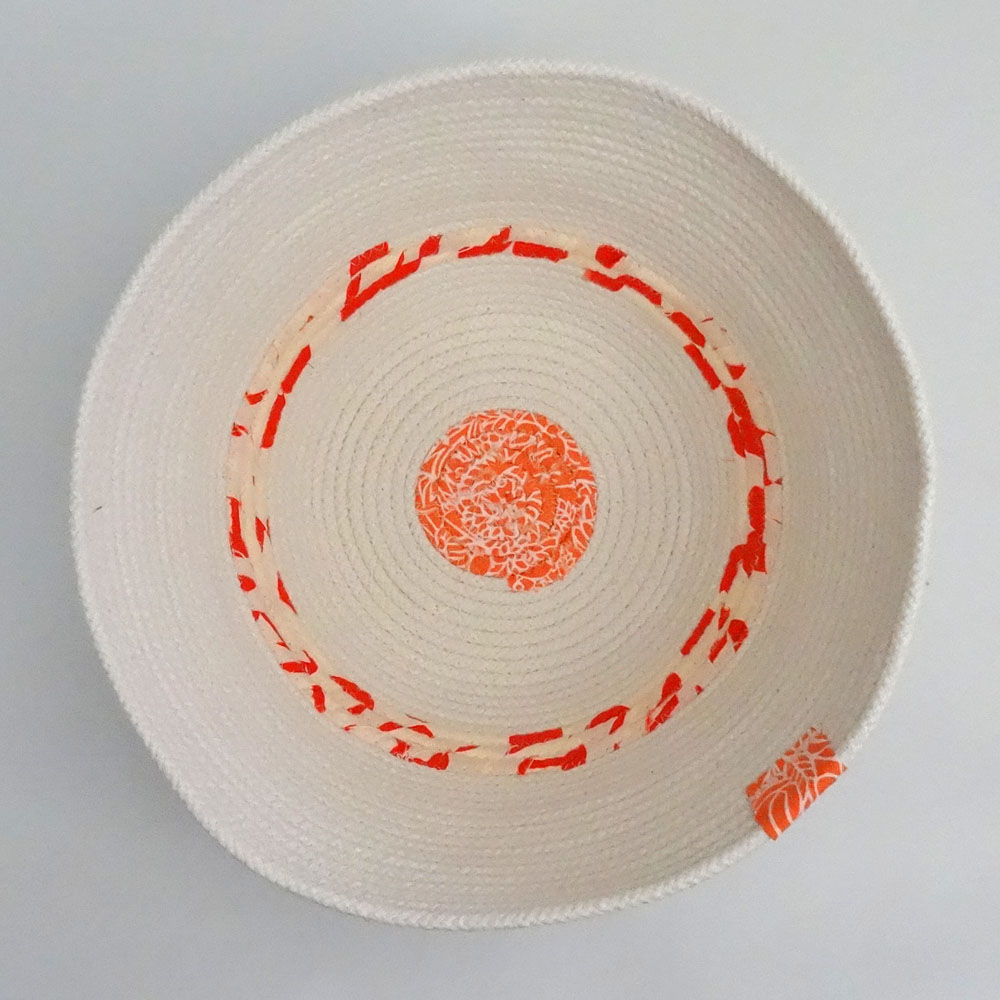
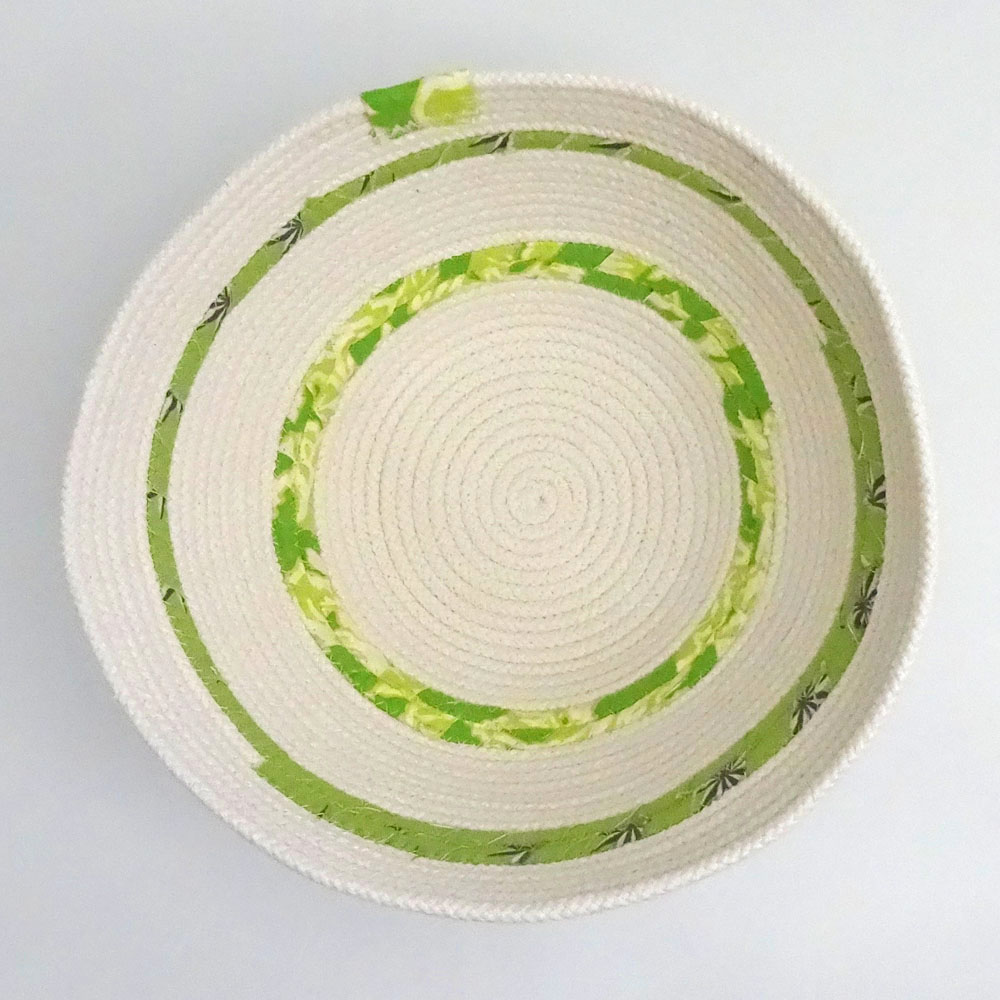
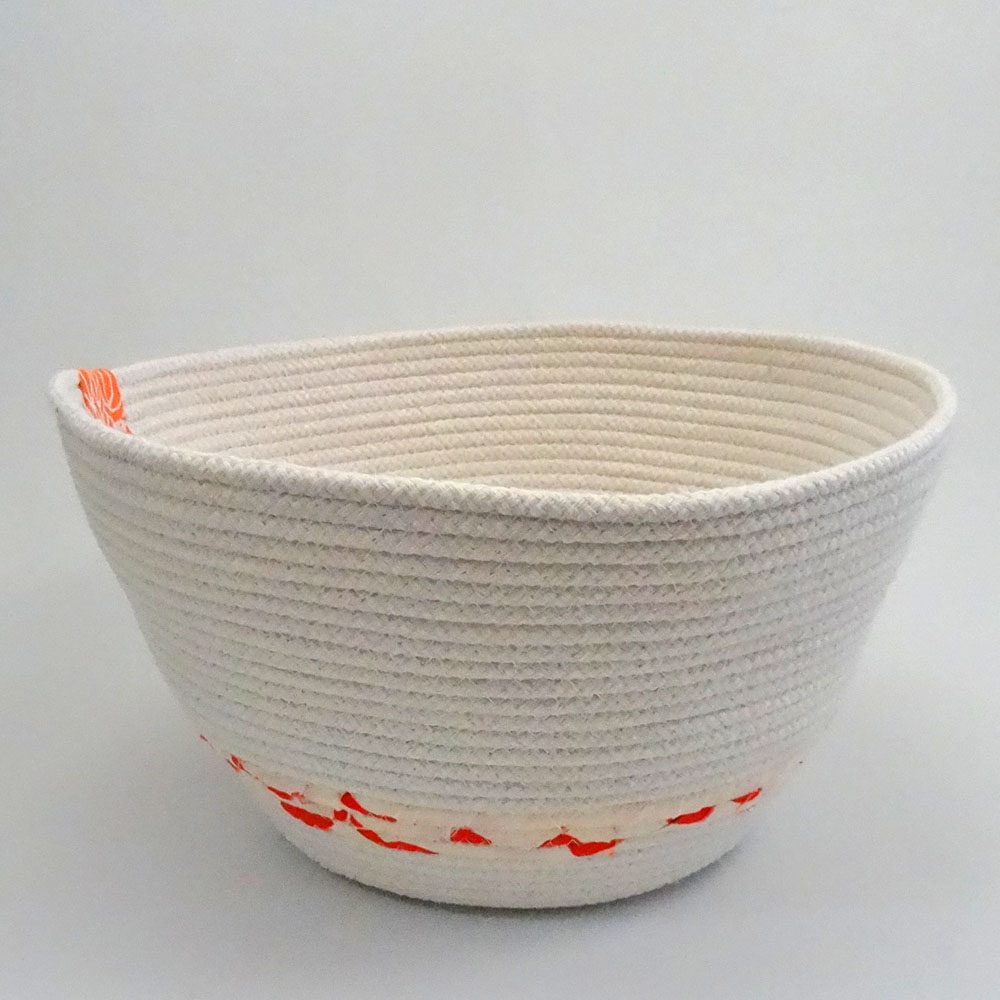
I have given in and gone after the trend, copied the masses and followed the crowd. Yes…. I too made rope bowls this past Christmas! It seemed everywhere I turned on Instagram last month there was photo after photo of rope bowls being made. Gifts for teachers, parents and friends – and, in my case – my sister.
I am pretty sure I saw this idea a few years ago somewhere. But the tutorial I used to start me off was only written in September of last year. Flossie Teacakes has a great tutorial post with some good tips on how to make them work. Since my sister crochets, I found a pretty blue skein at my local quilting/yarn shop to add to the mix. Hopefully it’s a nice one. That’s what the employee told me anyhow!
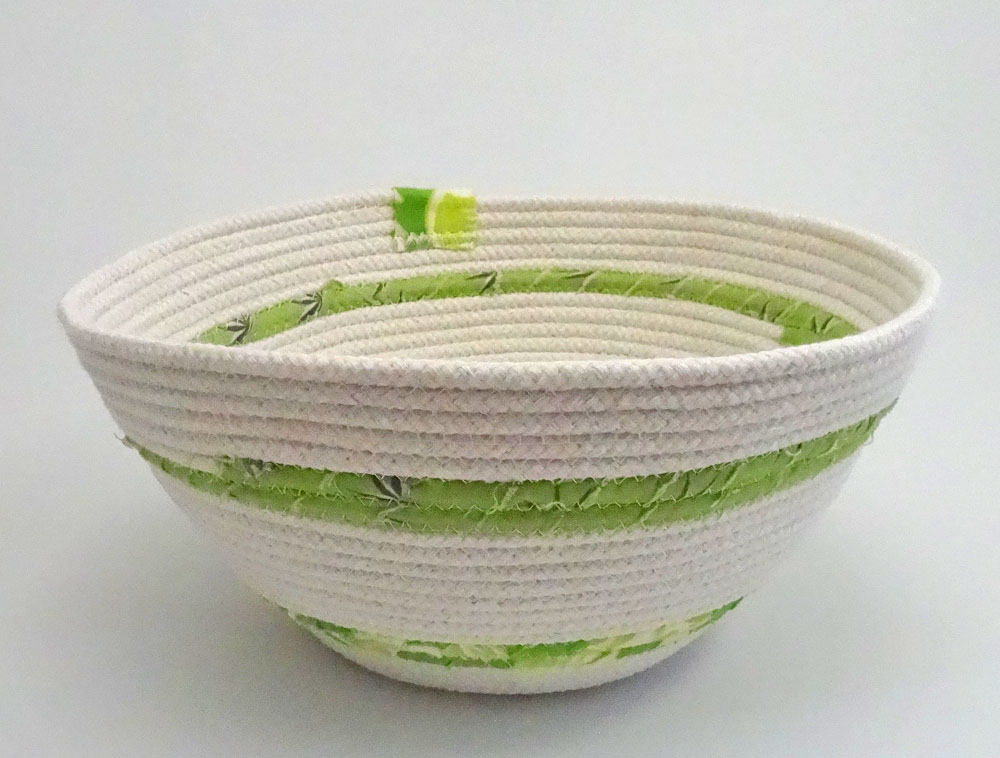
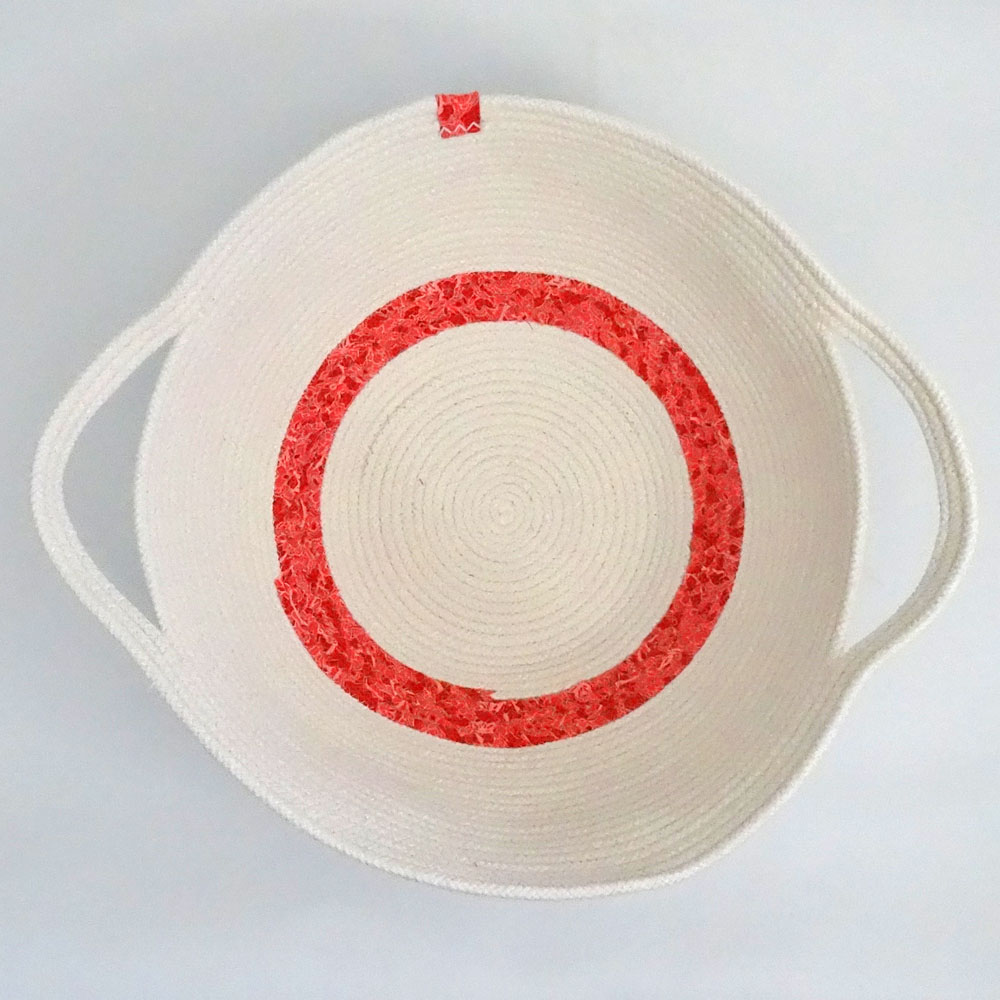
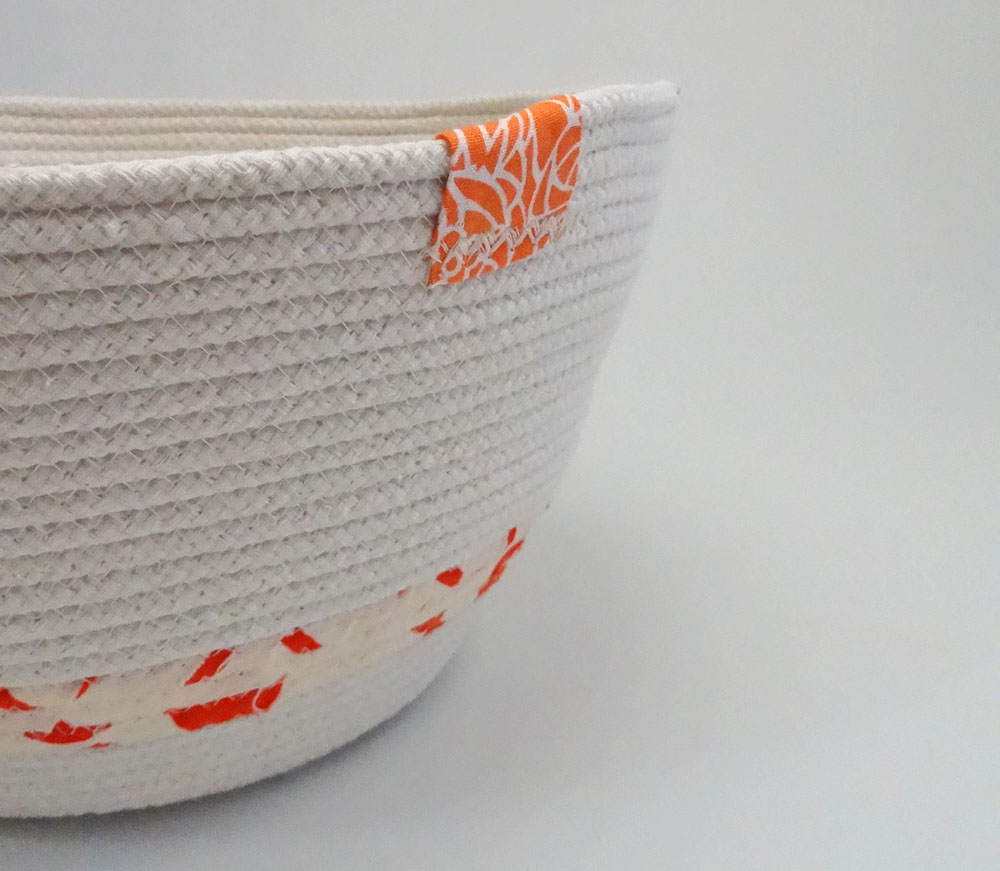
I decided to wrap fabric around some of the coils, added handles to one basket – and in general tried to make three different “nesting” bowls without making them all the same. The fabric was a great scrap buster and I would have used up a lot more scraps had I not gotten tired of wrapping fabric. It’s a bit fiddly to make it lie straight along the rope – or maybe I’m just not patient enough!
A good tip for wrapping the rope? I used a 1″ strip, unfinished, and glued it to the rope with my glue stick. It worked wonderfully and I didn’t have to hold it in place, which was nice. I also have some photos of how I finished the ends with a fabric tab and wrapped the rope with fabric successfully, so if you want a mini tutorial on that just ask and I’ll post them.
As you can see from the myriad of photos, I really like how these turned out. These baskets sew up quick. They are pretty cost effective and really addictive to make.And they are uber-fun to photograph, looking lovely on my favorite white background!
Have you made any rope baskets yet? What was your favorite part?
by Sherri Sylvester | Jan 11, 2016
Wow! It’s been a quiet few weeks around here! I’ve been grateful for the pause, when the girls are home from school it’s always busier. We are also in the middle of organizing and de-cluttering our home and doing a mini-renovation in the basement.
We are moving from the tiny upstairs 10×10 office/sewing area my husband and I share into a space almost twice as big by re-purposing the basement space we rarely use. But first, we need to move a closet, build a wall, add a door, move another door and paint – all while running our own businesses and being a family. So we should be finished sometime mid-summer?! Ha!
Today I get to start talking about the Christmas gifts I couldn’t share before the holidays. This year I had less time than usual and thankfully Pinterest came through with some quick and easy gifts – less involved than last year’s Cargo Duffles for sure! And I pinned some great gift ideas that I can use another time – Bonus!
Did you make any Christmas gifts this past year?
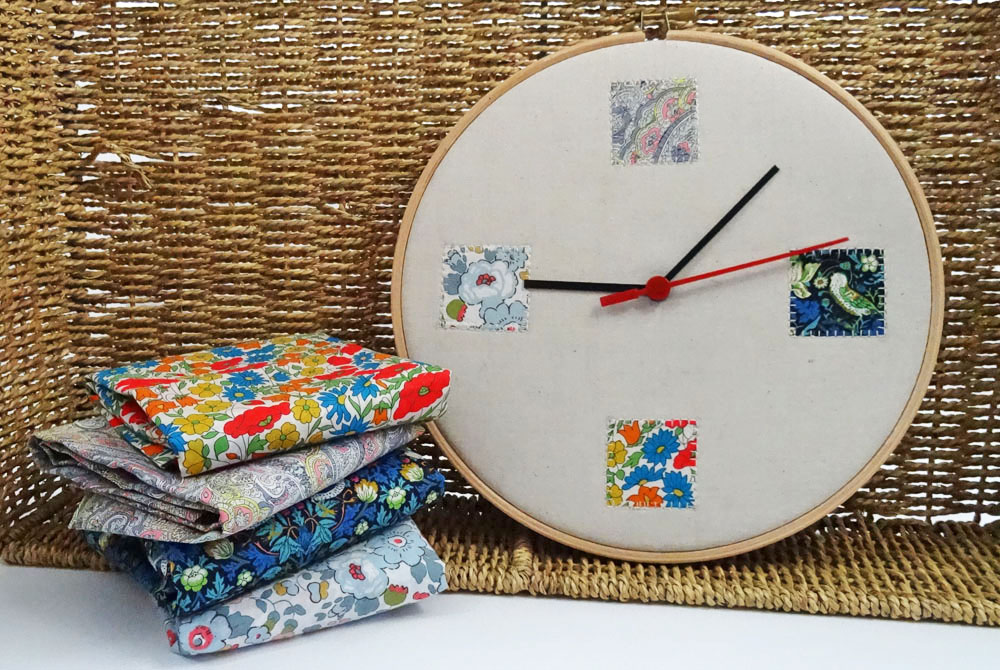
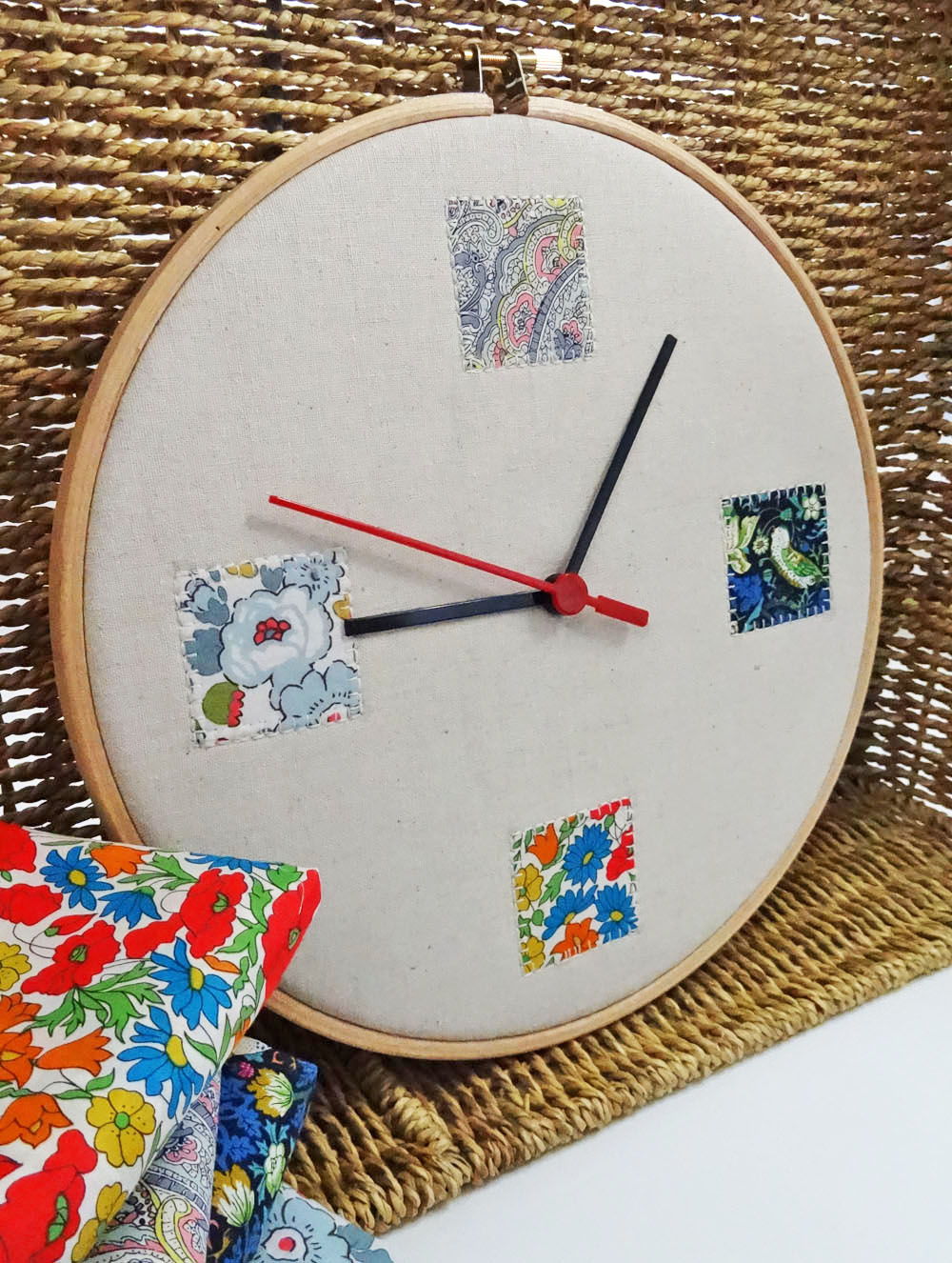
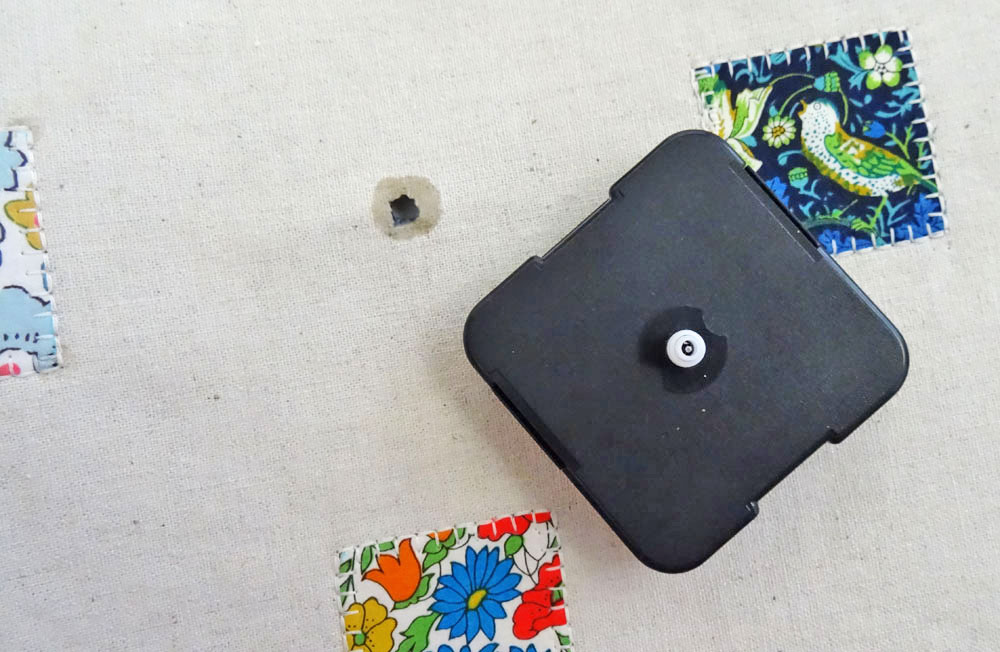
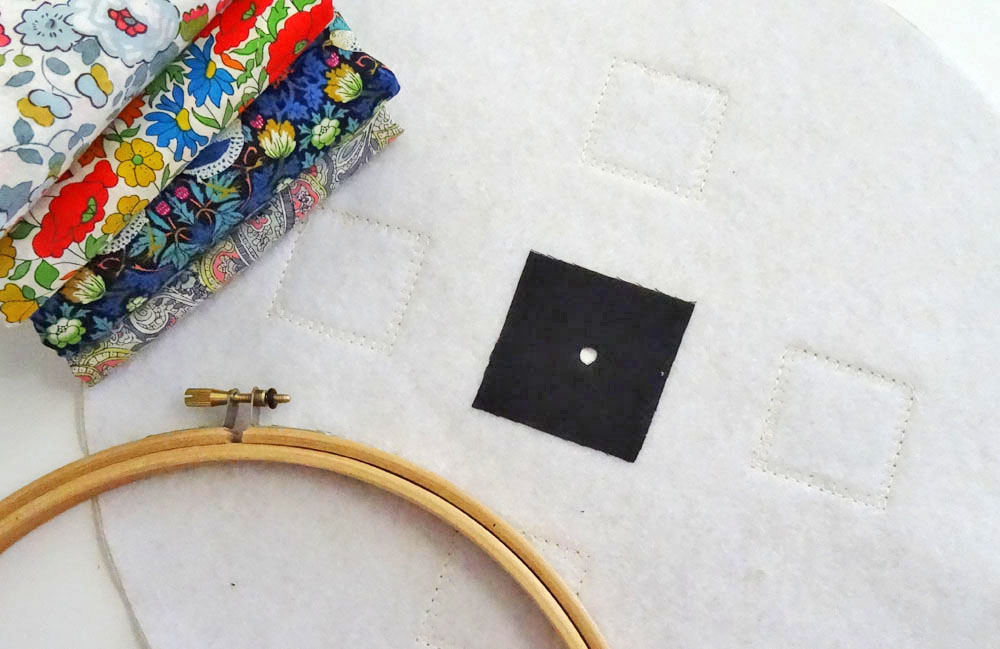
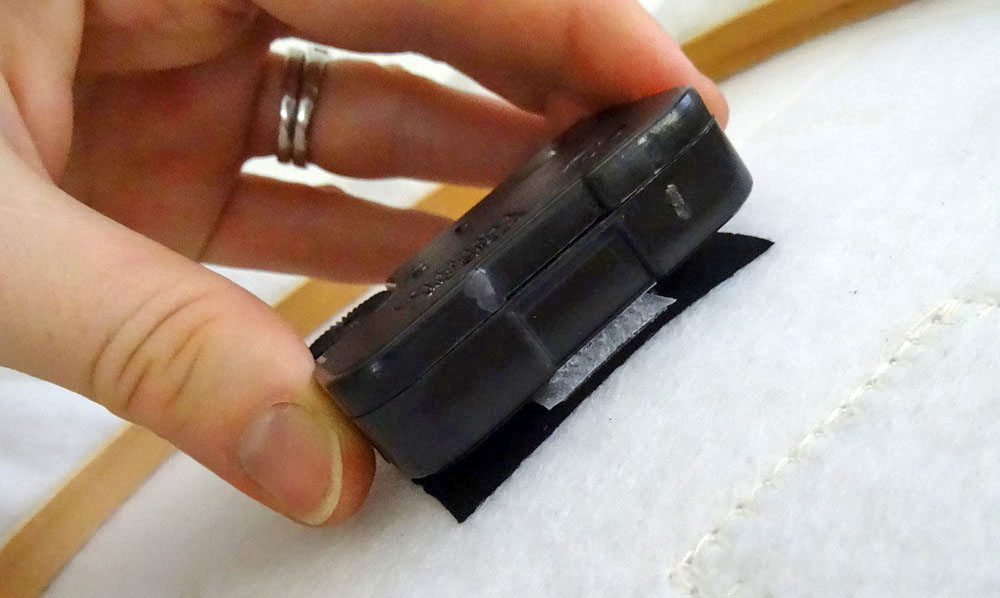
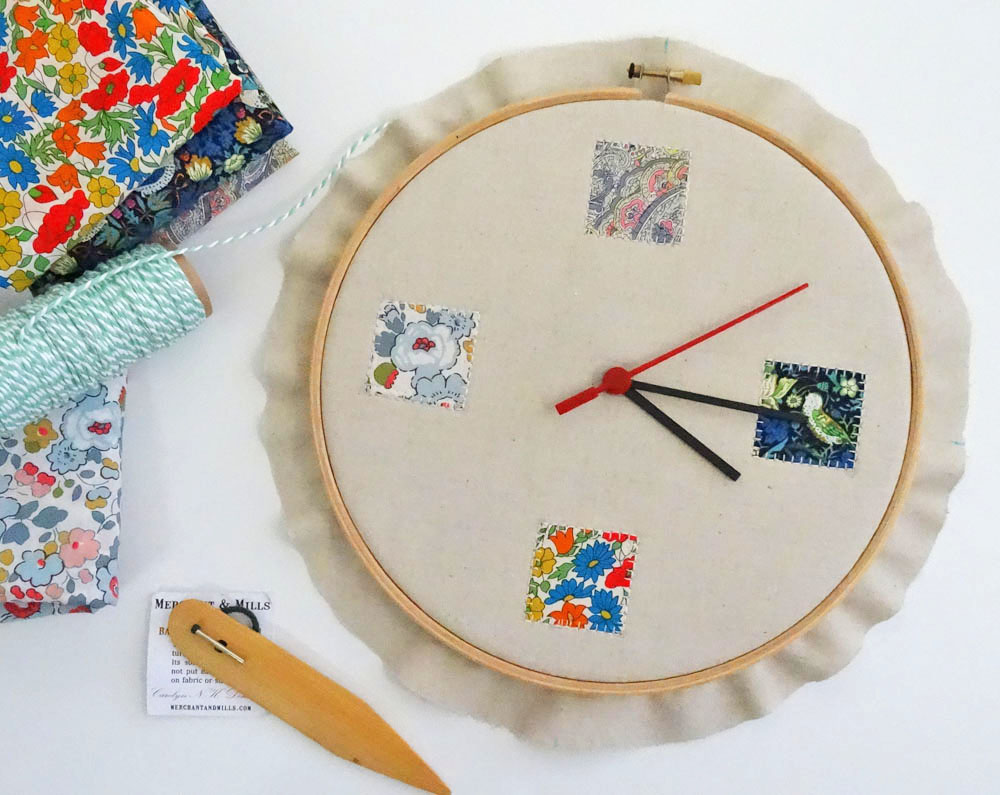
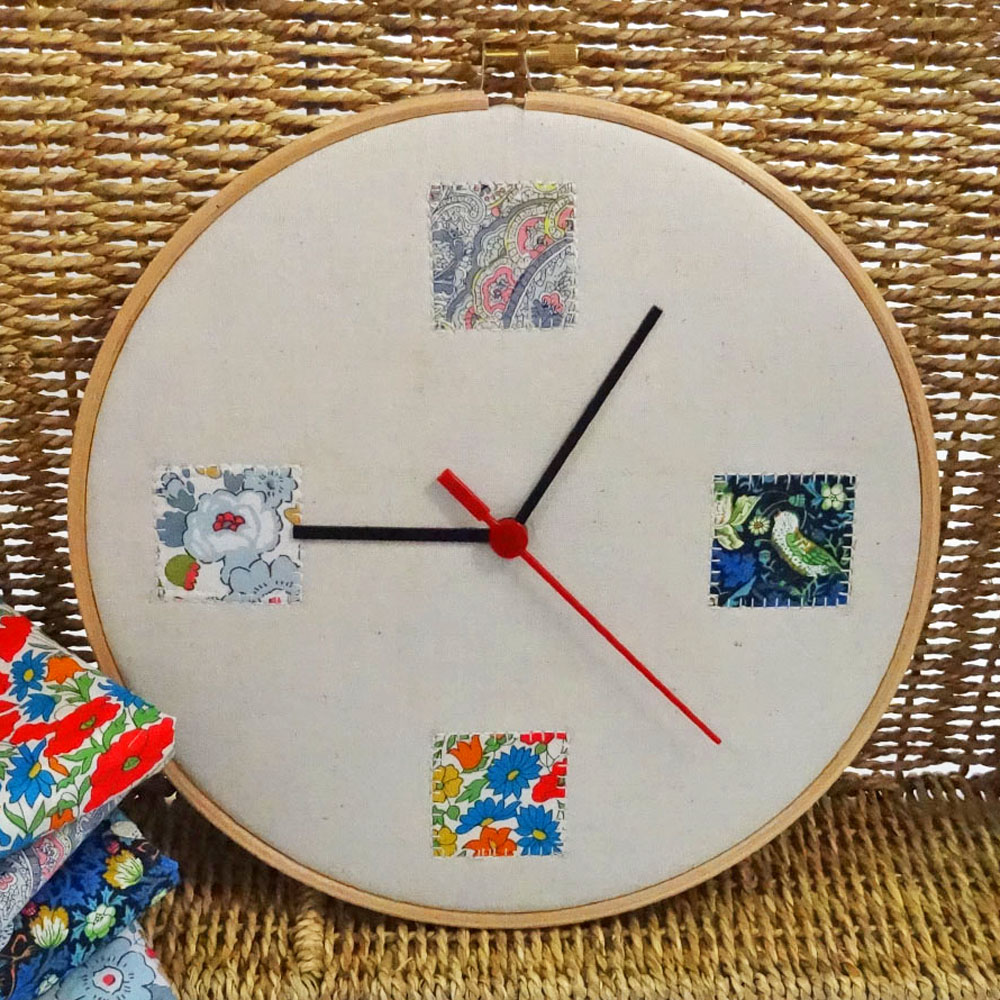
First up, my mom’s Liberty Clock. This idea came from Vicky Myers Creations and her super-cute DIY Embroidery Hoop Clock tutorial. Our clocks ended up looking very different, but the basic idea is the same. Here are a few things I did differently from Vicky’s tutorial.
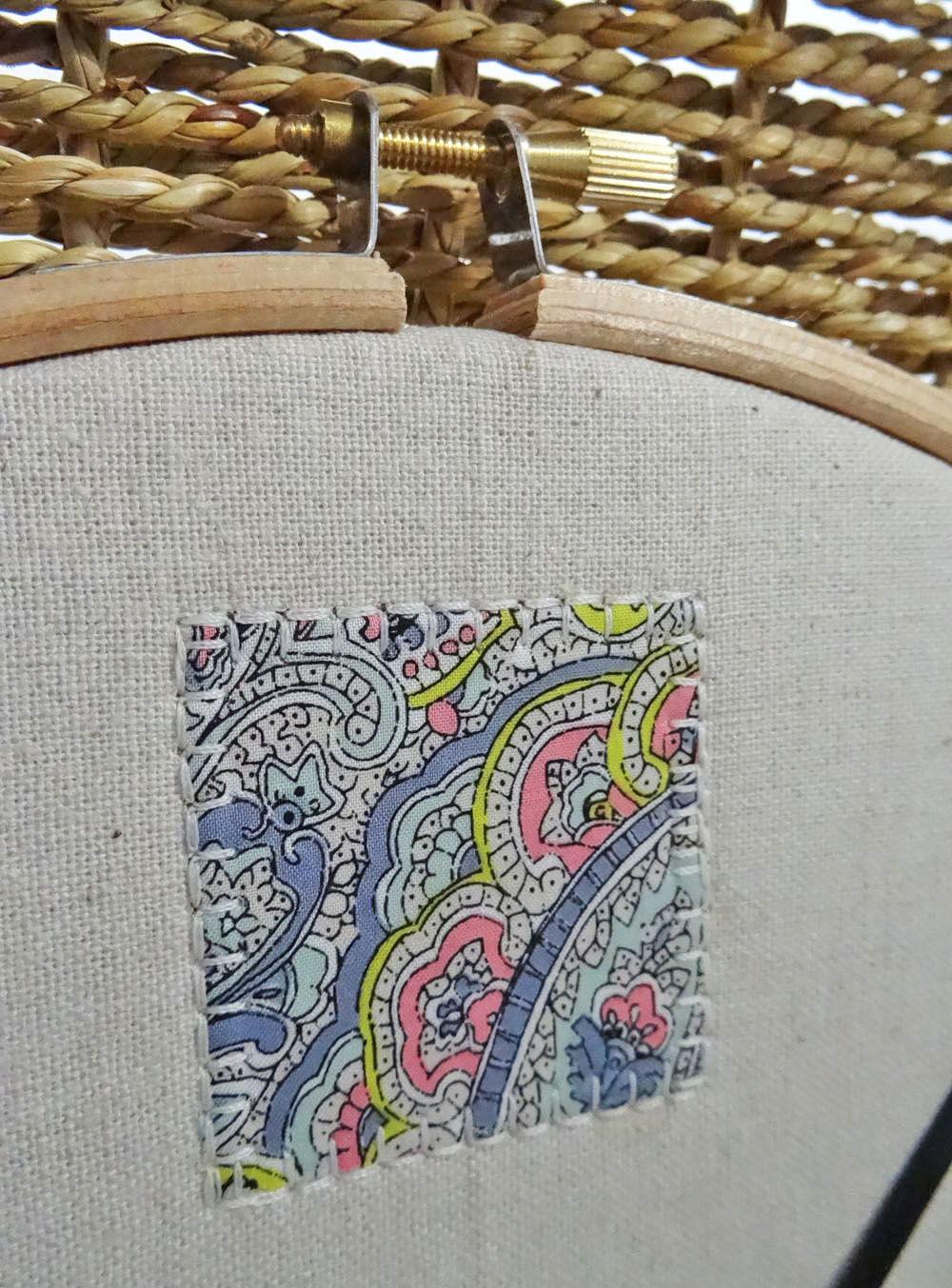
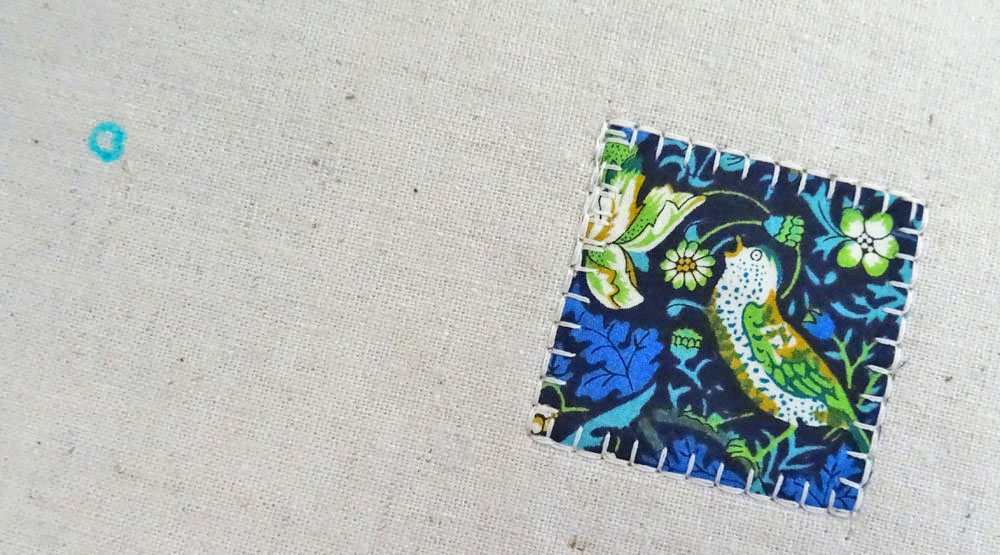
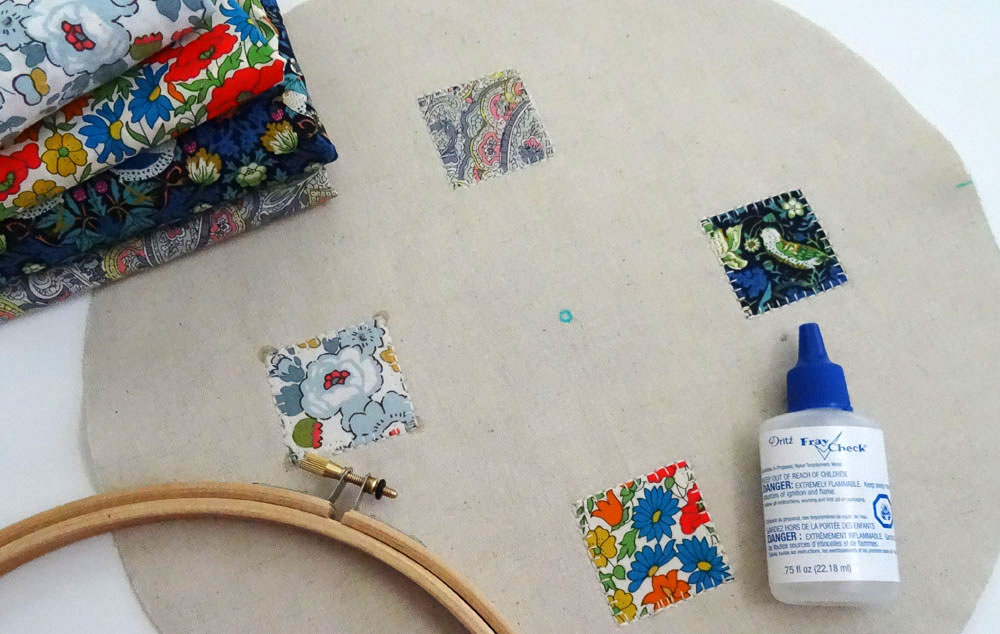
- 1 1/2″ squares of Liberty fabric to mark the clock quarters instead of buttons. The edges are finished using an applique stitch on my Skyline S5. Clearly I need to try to end the stitches in the same place next time instead of overlapping them!
- Fusible Fleece instead of thick interfacing. I wanted a more “quilted look”, which would have worked out better had I actually quilted the main fabric!
- Liberal use of Fray Check! I used it on the centre hole for the clock mechanics and the thread ends of the applique
- Extra interfacing around the centre hole. Just to make sure it didn’t fray and the clock mechanics would have plenty of support so the fabric doesn’t droop. (I hope?!)
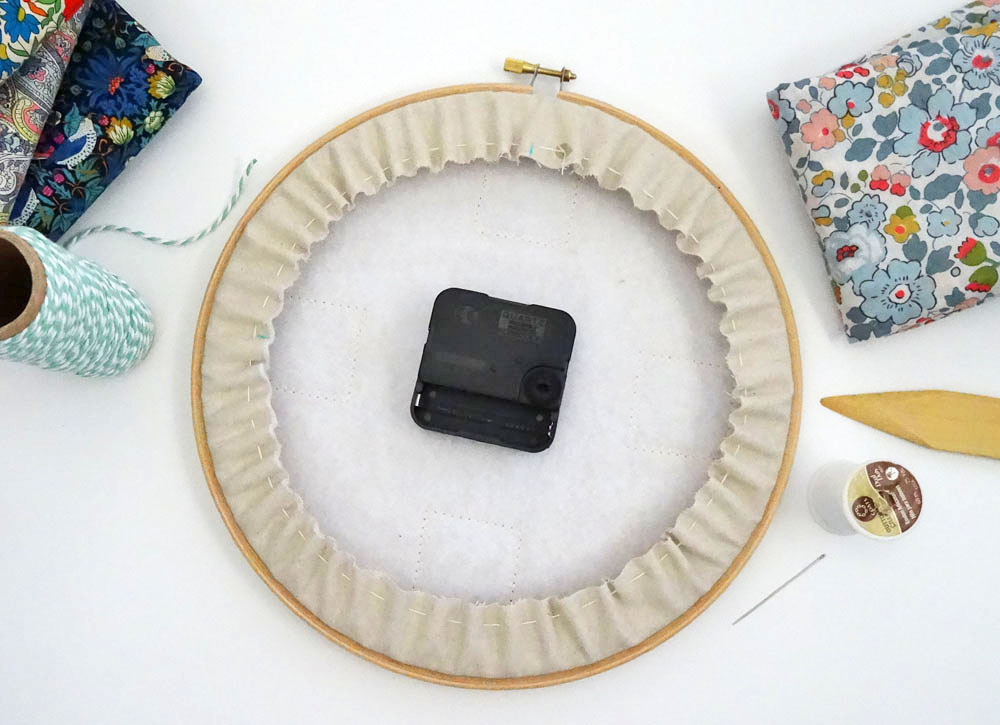
- Sticky non-sew Velcro to hold the clock mechanics upright.
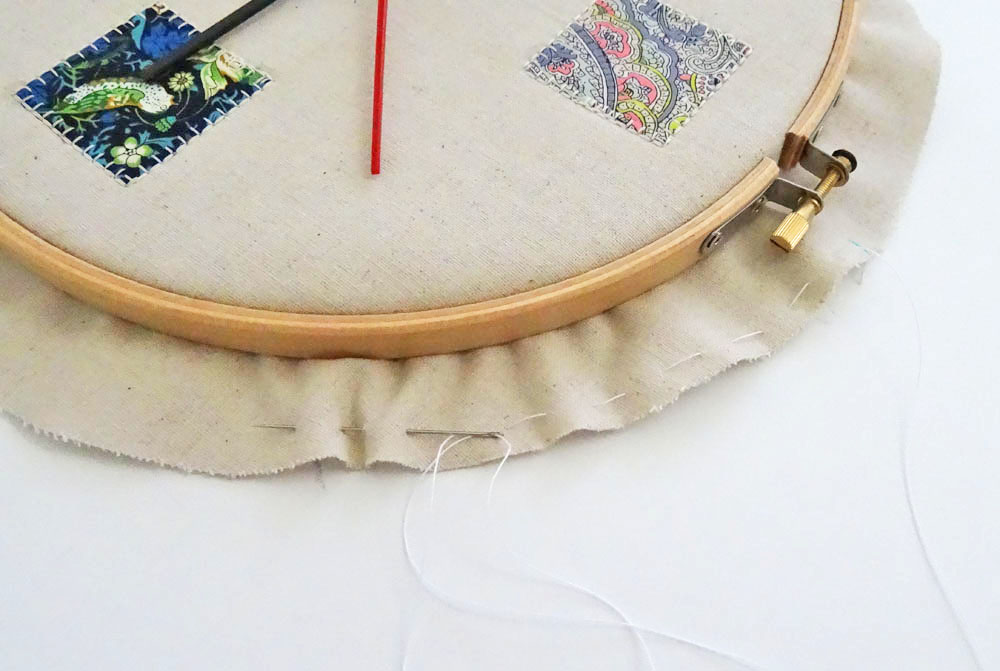
- All excess fabric behind the hoop. To do this I ran a basting stitch with button thread around the outside of the circle and knotted it to pull in the fabric. (And added more Fray Check!)
I was so excited to get to use my Liberty fabric for this project.
Dorienne gifted me two Liberty fabrics that she bought in the Liberty of London store – in actual London! Eeeek! (
I am so grateful, and still hoarding them!) I also love how the Liberty looks with the Essex Linen in Natural that I bought from my sponsor
Mad about Patchwork.
This project is a great way to show off your precious fabrics without cutting a large chunk out of them! I think I might need one in my soon-to-be-finished sewing space. I’m sure there is another old clock somewhere in the things we need to de-clutter!
by Sherri Sylvester | Dec 7, 2015
I love having a theme with a deadline to sew for, it brings out all kinds of crazy-creative in me and today’s project is no exception. I’m thrilled to be part of Making Merry with Janome today! Since Janome Canada is my sewing machine sponsor, they’ve let me borrow a beautiful Skyline S5. (Squeee!)
This Janome machine truly makes my sewing more merry all on it’s own. But this blog hop is about Making Merry by sewing at Christmas, so I decided to create a Christmas-themed table runner, since our family didn’t have one yet. Now we do and I love it! The tutorial with printable pattern pieces is included below so you can make one too.
These quilted 14″ placemats can be used for a table setting or laid out in a row as an interchangeable table runner. I prefer to use them in table runner style to save myself the mild heart attack of letting my kids eat cranberry sauce over them! Of course, you could make just one to decorate a small round side table as well. If you are a little bit adventurous, you could even turn the circle applique into a round pillow. How cute would that be?!
All of the fresh and pretty fabrics I used for this project were provided by my blog sponsor, Country Clothesline. Their uniquely curated fabric selection is full of gorgeous florals, vintage reproductions, dots and stripes. Plus you never know what else you’ll run into! Apparently I like dots, since three of the 4 fabrics in this project have them. Find them all here: Red Dot, White Dot, Grey Dot, Wintery Blue.
As usual, please feel free to use my patterns/tutorials for your personal projects and gifts and for charitable fundraising events. Please do not sell anything sewn with this pattern. If you are interested in making this item for sale, please contact me and I will set up a license for it in the shop. Thank you!
Materials:
- 1/2 yard each of 3 pre-washed fabrics (to make 3 placemats)
- 1/4 yard (or fat quarter) for hanger applique
- one 14.5″ square of quilt batting per placemat
- fusible web for applique (this one is my favorite!)
- 1/2 yard backing fabric (enough for 3 backing pieces)
- matching thread for applique
- removable fabric marker
- fusible interfacing to layer under applique if colour shows through (I used this between blue/white stripe)
- optional: walking/even foot is desirable for quilting
- optional: basting spray (or pin baste)
- CLICK TO DOWNLOAD: Christmas Ornament Placemat Pattern Pieces, 5 page pdf
Printing the Pattern:
- Download the Pattern Pieces using the link in the Materials listing. Print out all 5 pages of the pdf on letter size (8.5″ x 11″) or A4 paper. Important: Do not select “fit to page” when printing, make sure you print at the original size. Once you have printed the pages, measure the 1″ test square to ensure the pattern is the correct size.
- Cut the pages on the outer gray lines and tape/glue the pages together, matching the letters in the gray half-circles. Once you are finished, cut out each pattern piece.
Cutting your Fabric:
- Use the cutting layouts below to cut each pattern piece. ** Be sure to cut as indicated to leave room for the bias cut binding strips.
- Cut 3 bias-cut binding strips to match each main ornament fabric (as shown below)
- Cut one 14.5″ square of low loft batting per placemat
- Cut one 14.5″ square of backing fabric per placemat
- Cut fusible web for each stripe and hanger pattern piece you need
- If desired, cut fusible interfacing to place between the stripe and the main ornament fabric. This helps a darker main colour not to show through a lighter stripe.
Preparing to Sew:
- Piece the three bias strips together to make one long strip. Fold the bias strip in half lengthwise and press well. Set aside.
- Layer your main fabrics. Place the backing right side down, layer the batting on top, layer the main ornament circle over the batting right side up. Spray baste if desired, or pin baste later on.
Sewing the Applique:
- Place the stripe and hanger correctly on the ornament circle following the red/dashed lines on the pattern piece. Adhere the fusible web.
- Pin baste layers together (if not spray basted earlier)
- Use an applique/blanket stitch to stitch around both fused pieces. (Skyline S5 Stitch #37: 3.5 wide, 3.0 long, AUTO tension)
Quilting the Placemat:
- Mark all light grey quilting lines from the pattern piece onto the ornament and hanger, including the hanging loop. I found that my hera marker worked well – I placed the paper template over the fabric and marked each line, then traced them with a water soluble fabric marker for better visibility. You can also use dressmaker’s carbon and tracing wheel, or even cut the pattern pieces on each line and trace around them to mark each one.
- Stitch the Quilting line on the hanger with the applique/blanket stitch.
- Quilt all other lines with a straight quilting stitch, leaving hanging loop to the next step. (Skyline S5 Stitch #01: 4.5 wide, 3.5 long, Tension at 3)
- Use a contrasting thread and small zig-zag to stitch hanging loop. I had some grey-tone embroidery thread on hand that I used. (Skyline S5 Stitch #11: 2.0 wide, 0.2 long, AUTO tension)
Binding the Placemat:
- Trim excess backing and batting, following the edge of the main ornament circle.
- Apply the bias binding as desired. I like to machine quilt my bindings and use this tutorial as a guide. ((Skyline S5 Stitch #01: 8.5 wide – brings needle to 1/4″ from edge of even foot, 3.0 long, AUTO tension)
Remove all fabric markings, press if desired, and you’re done!
——————————————————————-
I’d love to see your project! You can share photos on Facebook, Twitter or Instagram (links below) using the hashtags #alongforthreadride and/or #threadridinghood. Thank you!
Disclaimer: Janome Canada is my sewing machine sponsor, you can read more about why I love Janome machines from earlier this year. Country Clothesline is a blog sponsor and provided the fabrics for this project. I truly love each of their products and always give my honest opinion. Thank you for supporting this blog’s amazing sponsors.
by Sherri Sylvester | Aug 12, 2015
Oooh, this summer is going so fast. I can’t believe there are only 3 weeks left of our 10 week summer break! I’ve got so many of my stickers left to accomplish I don’t even think we’ll actually finish them all, maybe next year? I’m hoping to sew up a lot of back-to-school project with de-stashing in mind. Lots of dresses with long sleeves, to use up as much stash as possible!
Last month I acquired another large sewing project. Re-upholstering a mid-century modern 3-seater teak couch and chair. Here are the “before” pictures…
My mom and I found them at a garage sale for $60! Both pieces were professionally re-upholstered 5 years ago. It’s in great condition and the shape is amazing, but I am definitely not loving the “forest green” colour. It really clashes with our blue and red living room scheme! So for now it lives in our basement. I’m hopeful I’ll have some time to work on it this fall.
In the meantime I’ve been thinking about fabrics and what type of fabric was best when re-upholstering it. After a ton of research I feel way more comfortable choosing something and even wrote my latest Craftsy blog post about the two things you need to know to choose fabric for slipcovers. Now all I need to do is find the perfect fabric…. all 20(+?) metres… preferably on sale…. argh!
What do you think? Would you ever tackle re-upholstering your furniture? Or have you? (You brave person you!) How did it go?