by Sherri Sylvester | Jul 13, 2014

I love a good quiet book page with some movement and a fun learning opportunity! This abacus (of sorts) is not terribly accurate, but you can count each string’s beads and move them up and down as you do. I made the first version of this with actual beads, (which you can substitute if you want of course) but I’m so paranoid of someone’s child choking on a bead, that I’ve devised a way to (hopefully) make it safer by using scraps of vinyl or leather.
I’ve also omitted the numbering, since I was not satisfied with the quality and “professionalism” of my 80’s-esque puffy paint art on the beaded version! I think it also promotes parent/child interaction by creating an opportunity to play with the child and count the beads out loud. Wow – look at me, I sound like some sort of educational parenting expert now… so totally not the case in real life!
the “original” quiet book abacus page
I’m posting the materials and tutorial for this today because I’m on vacation this coming week – hooray! I’ve also got some secret plans for the week… so there won’t be room to post the proper Quiet Book post. What is it you ask? Come back Monday to find out! (Hint… it has something to do with the fact that my blog started 2 years ago on the 12th of July!)
How about making that Abacus page… just to stay busy so the curiosity doesn’t drive you crazy! (If you are just starting find all the information you need on this Sew-Along page.)
You will need:
- Background Fabric: 1 piece quilting cotton exactly 9″x9″ square
- Page Interfacing: 1 piece exactly 9″x9″ square, medium weight fusible interfacing (you will have this from your Week 1 shopping list)
- Top & Bottom of Abacus: 2 pieces of fabric, 2.5″ high by 7″ wide
- Abacus Strings: 5 pieces of 6″ long, 1/4″ wide, 100% polyester ribbon
- “Beads”: 3 small leather or vinyl scraps in different colours (approximately 2 3/4″ x 3″ each)
- Ribbon: 3 1/2″ long for the side tab
- Small Safety Pin
- Glue Stick
- Leather needle (if using)
Before we begin/Important Notes:
- When you are sewing this book it is good to remember that some of the edges will be covered after the book is completed and sewn together. 1/2″ on the top edge of your page and 3/4″ on each side edge will not show in the final project.
- Remember to use your iron liberally when you are sewing this book. It is going to be a work of art when you are done! Since it is thick and some of the pages will not be iron-able once you are finished with them it is advisable to take all of the care you can to remove wrinkles so they are not accidentally permanent in your final book.
Here’s how to make it:
- Interface the 9″ square background fabric with the 9″ square interfacing as per the manufacturer’s directions. (My background fabric is “Quote This” in Cherry from Double Decker Fabrics.)
- To cut your vinyl/leather into 30 rectangles, you first need to cut 2 pieces 1.25″ x 3″ high from each of your 3 coloured scraps.
- Place the cut vinyl/leather wrong sides together with their matching colours and glue a very thin (1/4″ max) line along each edge to hold them together.
- Once the glue has set, mark each pair every 1/2″, as in the photo below. Use a pencil for this, so the marks can be removed later. There will be a space at the end that will not measure 1/2″ – this is extra.
- Stitch down each edge of your leather/vinyl with a 3/8″ seam. ** It is important to treat each 1/2″ mark like it is the beginning or end of a seam. Back stitch at the beginning and before you reach the end of each 1/2″ mark. We will be cutting on the marks to make these beads, so you want your stitching to be strong and reinforced so the beads stay together. If you are having trouble stitching the vinyl or leather because it is tacky – try this trick.
- Cut each leather/vinyl rectangle 1/8″ away from your stitches on each side. This will create a 3/4″ wide rectangle.
- Cut each long rectangle along your 1/2″ marks to make your beads.
- Fold the ends of your fabric in 1/2″ and use a glue stick to hold them in place.
- Fold the fabric in half lengthwise and press, unfold and fold each side into the centre. You can use a glue stick to hold this in place, or just press it extra well with lots of steam.
- Prepare your abacus strings by melting each end of the ribbon over a flame. (I know you will be… but please be careful!) The melting will only work if your ribbon is 100% synthetic fibres. ** If it does not fully melt, it is not appropriate for use in a quiet book because the strings could fray over time (even when stitched) and come out, leaving the beads to be chewed on and potentially becoming a choking hazard.
- Use a glue stick or pins to adhere one side of one of the folded fabric strip to the background fabric, 2″ down from the top. Adhere the other one to the bottom centre, 2″ up from the bottom. Make sure there is a 4″ gap between the strips. Leave the strips open so we can place the ribbons between the folds.
- Line up the strings so they are equally spaced along one of the fabric strips. I used a glue stick to hold them in place. The ribbons are long on purpose to make them more secure. Place the excess ribbon inside the folds of the fabric strip. Make sure the bottoms of the strings are inside the bottom folded fabric strip as well, but do not pin or glue them in yet.
- Pin/Glue the top fabric strip shut. Stitch around the edge of the fabric, catching the ribbons. Also stitch through the centre 2 or 3 times to reinforce your stitching and make sure the ribbons never come out. **Please, again, be careful when using beads and small objects around children. I cannot be held responsible if anything happens… and I want to be extra certain that this page is safe!**
- Place the beads on your strings. I have separated them out to make the numbers 1 through 5. A skewer helps to get the ribbon through the bead.
- Insert the bottom edge of each ribbon into the fabric strip and follow steps 11 and 12 again to close up the bottom of the abacus.
- Fold the 3 1/2″ matching ribbon tab in half and use the small safety pin to attach it to your page so it does not get lost.
All done! And we are half way through our Quiet Book pages! 6 down, 6 to go… Thanks for sewing along! Please check the
Sew-Along page for a list of all the tutorials + ways you can share your book. As usual, please let me know if you have any questions: email sherri@threadridinghood.com or leave a comment.
** As usual: This tutorial is for personal or charitable use only. Please do not sell items made with the Quiet Book Sew Along posts. If you wish to sell these please contact sherri@threadridinghood.com for information on how to purchase a license. Thank you!
by Sherri Sylvester | Jul 7, 2014
Here is the tutorial to go along with the materials listing and description for the Telephone Quiet Book Page. (If you are just starting find all the information you need on this Sew-Along page.)
Before you begin, get the items you will need for the telephone page from the materials post.
You Will Need: (in addition to the materials list)
Before we begin/Important Notes:
- Print out the pattern piece pdf on letter size (8.5″ x 11″) or A4 paper. Important: Do not select “fit to page” when printing, make sure you print at the original size. Once you have printed the pages, measure the 1″ test square to ensure the pattern is the correct size.
- Print out the dial pad number printable. It is set to print in a 4″x6″ page, so it is easily printable on a larger sheet. Be sure to follow the directions for flipping or not-flipping the image before you print it. Also, be sure to print only the colour of dial pad that you want. I have included white, blue, pink and yellow. You can easily do this by only printing the page with the colour you’d like to use.
- When you are sewing this book it is good to remember that some of the edges will be covered after the book is completed and sewn together. 1/2″ on the top edge of your page and 3/4″ on each side edge will not show in the final project.
- Remember to use your iron liberally when you are sewing this book. It is going to be a work of art when you are done! Since it is thick and some of the pages will not be iron-able once you are finished with them it is advisable to take all of the care you can to remove wrinkles so they are not accidentally permanent in your final book.
Here We Go:
by Sherri Sylvester | Jun 24, 2014
In the last year or so I’ve felt the need to do something “good” with my sewing – and especially my never-ending stash of fabric. I remember seeing some kind of pamphlet at my local fabric store last year mentioning something about pillowcases, but I “got busy” (as usual) and didn’t pursue anything. Enter Alanna, from Friday’s Off Fabric Shop in Toronto, to give me a swift kick in the right direction! Thank goodness… because I needed it.
Alanna has recently volunteered to become a ConKerr Cancer drop-off location. If you have not heard of ConKerr Cancer, they make pillowcases – called “Smiles” and donate them to local children’s hospitals. They are given to children with cancer and other life-changing illnesses or injuries. These pillowcases brighten up hospital rooms and help to fulfill ConKerr’s goal of “of making hospital stays as pleasant as possible for chronically ill children and their parents.” (via)
I am especially excited that Alanna will be dropping off her pillowcases at the Hospital for Sick Children in Toronto, Ontario. I have had personal family experience with this children’s hospital and would so love to give some smiles to the kids there. I’m really excited to say that my sewing group has decided to take one of our monthly Sewcials to sew pillowcases for ConKerr. Hooray! I am also hoping to sew pillowcases with my kids and I would love to make it a regular project that we can work on together.
Want to help out?! There are a few very important things to remember if you choose donate some pillowcases. Sew with this specific pattern. Get kid friendly fabric. Wash, pack and ship your pillowcase as per ConKerr’s instructions. Alanna has explained exactly how to do this in 5 simple steps on her website, which includes the shipping address of the drop off location.
I’m excited to say that Alanna also has kits available in her shop – to give you a simple way to get exactly what you need to make and donate a pillowcase or three! Below are a few examples of kits she has available, click on the photos or the links to get to her shop. (The yardage is also available in her shop if you would rather mix and match your own fabrics.) To make it even easier for you to order, Alanna is also offering free shipping from today until June 30, 2014 on all orders shipped within Canada – use the code “TRHFREESHIPPING”! This discount applies to pillowcase sales AND regular yardage for other projects – go and get ’em folks!
I hope you will join us in making the lives of these hospitalized kids and their families a little brighter. There is a lot more information about ConKerr Cancer available on their website and so many inspiring photos. They have chapters located throughout the US, Canada, South Africa and the UK. I know we likely all have fabric stashed away that could use a home, please consider ConKerr Cancer as a great place to give it to!
I’d love to hear from you if you plan to donate pillowcases. I’d also love to know if you donate your sewing stash and time to any other “good” causes. Hearing what other people are volunteering their time for is so inspiring. Thank you.
by Sherri Sylvester | Jun 21, 2014
Oh my goodness everyone! I fell so far of track on this Sew Along and I have to say, it feels good to be posting these again. It weighs on me when I don’t do something I know I’m “supposed to” be finishing. Thank you so much for all of your kind comments in my state of the blog post. I’m so glad to know that you are all reading these – even if you’re not sewing along. I so appreciate all of you!
This page is a favorite with my kids. In fact, when I had both quiet books out together they have had phone conversations – each girl on a different “quiet book phone”. I should have gotten a photo! I’m happy that they even know it is a phone – amazingly, since phones do not generally look like this anymore. This page comes together fairly quickly and I will provide instructions and pattern pieces next time. (If you are just starting find all the information you need on this Sew-Along page.)
You will need:
- Background Fabric: 1 piece quilting cotton exactly 9″x9″ square
- Dial Pad: 1 piece white fabric for dial pad – aprox. 3″ wide by 4″ high
- Dial Pad Numbering: fabric markers OR inkjet transfer paper OR printable fabric (more on this below)
- Telephone Body and Receiver: 1 piece quilting cotton aprox. 10″ x 9″
- Fusible Web: 1 piece aprox. 9″ x 6″ for the telephone body (I love using Steam-A-Seam 2 Fusible Web from the Warm Company)
- Phone Cord: 1 curly shoelace (length as is, do not cut) OR 1 piece of ribbon (cut to aprox. 8″)
- Velcro: 1 1/4″ long piece of 3/4″ wide hooks and loops (match the loops to the reciever and the hooks to your background fabric)
- Stuffing/High Loft Batting: a handful of stuffing OR 1 piece of batting aprox. 7″ x 3″
- Ribbon: 3 1/2″ long for the side tab
- Page Interfacing: 1 piece exactly 9″x9″ square, medium weight fusible interfacing (you will have this from your Week 1 shopping list)
My dial pad was made using inkjet transfer paper (available from your office supply store). You could also draw it yourself with fabric markers, or use printable fabric. I was also contemplating making some different versions available on Spoonflower. An 8″ square printed swatch is only about $5 + shipping, so it would be a great inexpensive to get one of these if you don’t have the other options available to you. Please contact me (sherri@threadridinghood.com) if you like this option and I’ll figure it out.
And… we’re done for this week! Please check the Sew-Along page for a list of all the tutorials + ways you can share your book. As usual, please let me know if you have any questions: email sherri@threadridinghood.com or leave a comment.
by Sherri Sylvester | Jun 17, 2014
Good Tuesday to you! After a long and drawn out technology war with my computer today, I finally get to introduce a new sponsor – Double Decker Fabric! I met Dorienne online when I interviewed her last year for my Canadian Online Fabric Store series. She has a giveaway and a discount code for you today, so stay tuned! Before we get to the giveaway, I thought it would be fun to pair some of Dorienne and my favorite tutorials with her fabric. I love finding out what other people’s favorite tutorials are. Sometimes I have seen them before, and sometimes (like with Dorienne’s today) I find a few new ones, and some new favorite bloggers too. I hope you enjoy the list!
|
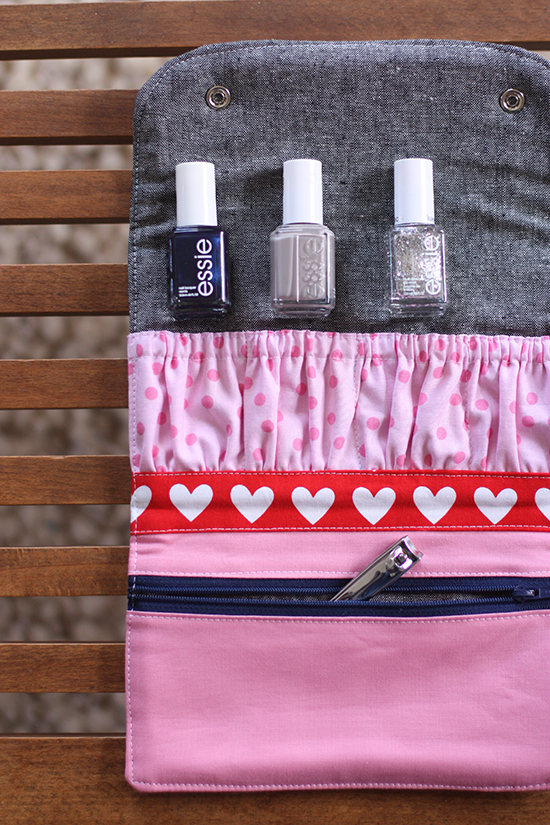
Tutorial: Snappy Manicure Wallet from noodlehead
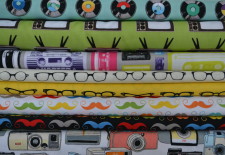
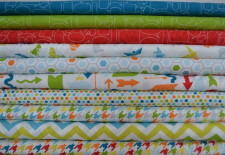
+ Double Decker Fabric’s “Geekly Chic”
Use Dorienne’s extensive collection of Geekly Chic from Riley Blake Designs to make one (or several!) of these cute manicure wallets.
|
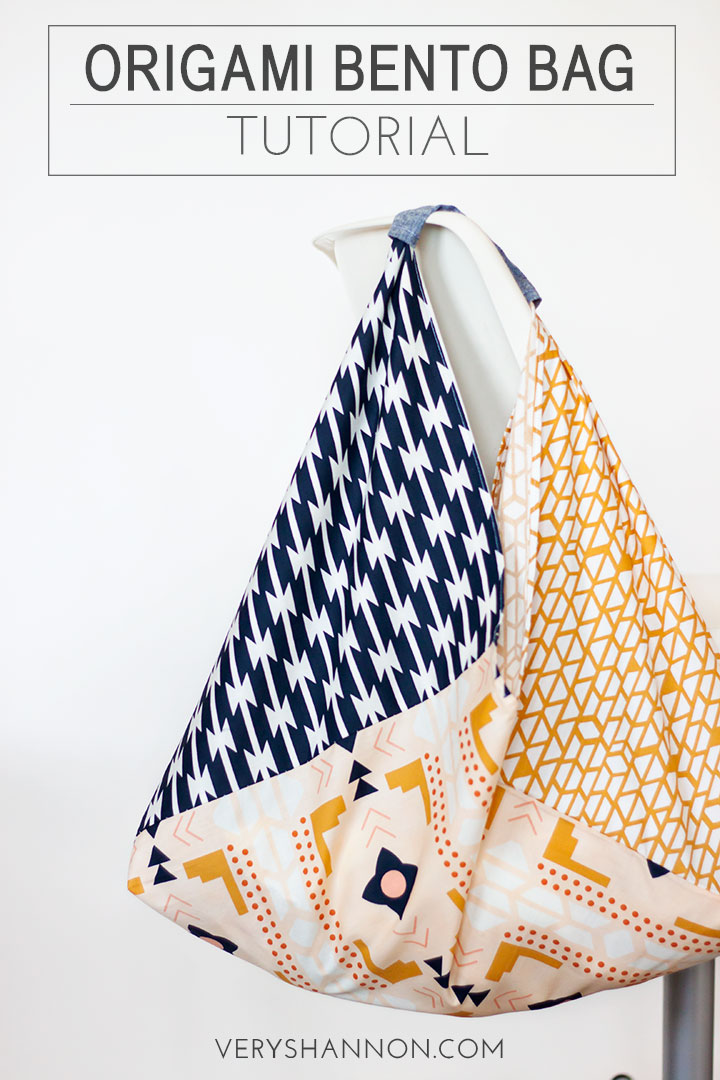
Tutorial: Origami Bento Bag from Very Shannon
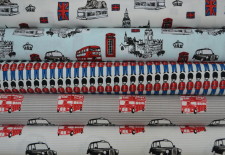
+ Double Decker Fabric’s “British Invasion”
British Invasion is the perfect trendy fabric to use for a fun summer bag. This tutorial is so quick and easy. Sew up a summer hostess gift in no time! |
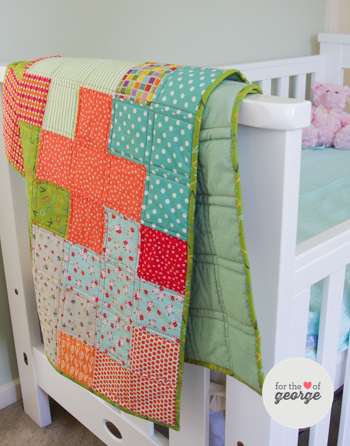
| Tutorial: Plus Quilt from For the Love of George
+ Double Decker Fabric’s “Mixed Bag”
This Mixed Bag collection from Studio M for Moda is so colourful and looks great together, it would be perfect for an easy-to-make Plus Quilt! |
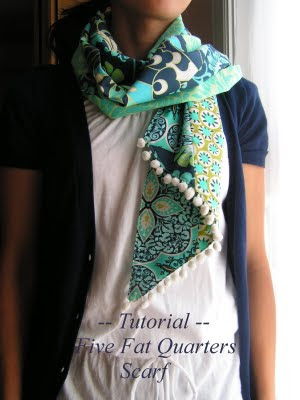
Tutorial: 5 Fat Quarters Scarf from Tea Rose Home
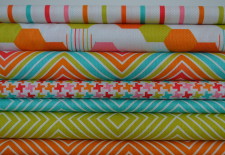
+ Double Decker Fabric’s “Textured Basics”
Use these textured basics to make a gorgeous bright scarf for summer. Perfect with those neutral colours that are so popular! |
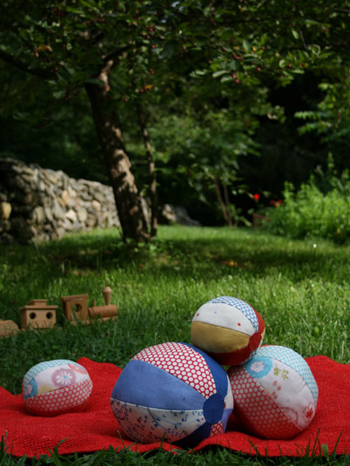
| Tutorial: Fabric Beach Balls from the Purl Bee
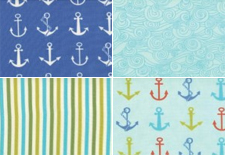
+ Double Decker Fabric’s BarthloMeow’s Reef
BartholoMeow’s Reef from Moda fits perfectly into this summer’s nautical trends and would be so cute as a fun soft beach ball! |
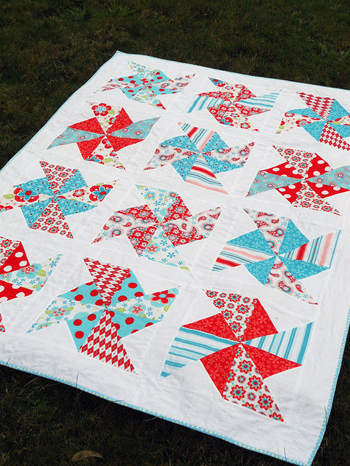
Tutorial: Pinwheels in the Park from Sew Mama Sew
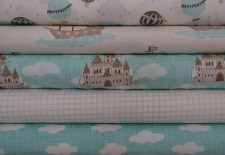
+ Double Decker Fabric’s “Storybook”
Add a few of Dorienne’s solids to this lovely Storybook fabric from Kate & Birdie for Moda and this tutorial would make the sweetest little boy’s quilt! |
Hooray for summer sewing, Dorienne has provided a discount for you that lasts until the end of June! Use the code “Summer15” to get 15% off your purchase from today until June 30, 2014. Head on over and stock up, I know you must have summer projects planned. (Or you could plan some now!)
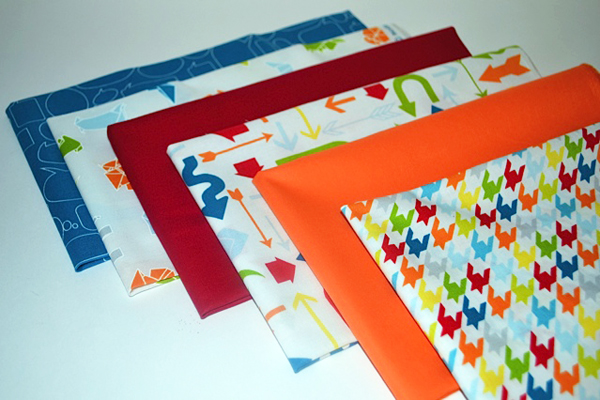
Last, but certainly not least, you can try your hand at winning some fun fabric today! Dorienne is giving away a bundle of Mixed Bag by Studio M for Moda. When I saw this collection I thought, “Oh my, I have to have some of those origami animals… and the houndstooth… and the dots… and I’ll need some of those red speech bubbles!” (Hee Hee, I know what I’m going to be spending my 15% off on!) pic of mixed bag bundle This contest is open to Canada and the US, and will remain open from today until midnight on Monday, June 23, 2014. Use the Rafflecopter widget below to enter – and if you don’t have Facebook to sign in with, just use your name and email address!
a Rafflecopter giveaway
by Sherri Sylvester | Jun 12, 2014
UPDATE 2020-07-17: Sew Mama Sew is unavailable. Please use the links to access the original tutorial and pattern.
Click to download the FREE INSULATED LUNCH SACK PATTERN PDF
Click to ACCESS THE LUNCH SACK TUTORIAL on the Wayback Machine
___________________________________________
I’ve been busy working with Warp & Weft and Sew Mama Sew to make another tutorial! This time around, it is for a flat-folding lunch bag tutorial, and I got to work with the new Anna Maria Horner collection – Pretty Potent! (Woot Woot!)
When I thought up the idea of making this lunch bag a few months ago I was thinking about how amazing it would be to make this type of lunch bag. You’ve likely seen similar ones at for sale… they fold flat with a zippered closure and lovely oval shaped handle cut-out? Unfortunately for me, some of the details on this bag were stupid complicated extra fun to figure out! Especially if your aim is not to use bias tape because you can never sew it on around curves (or is that just me?) Lucky you – because I’ve done all of the hard work, you can make it the easy way the first time around! (And I get to have extra workable-but-not-quite-right lunch bags around for… umm… using… for stuff… hooray for stuff!)
All kidding aside – I LOVE this tutorial and will likely use it to make my kids’ lunch bags from now until they are finished University. They are insulated with Insul-Bright, and water resistant because they are lined with ripstop nylon. Of course, all of the materials are washable – so they are kid-proof as well! They are very simply constructed, especially the Velcro closure version – since you can omit the longer zipper insertion instructions. I’ve listed a few ideas for how to use them on the main Sew Mama Sew tutorial, and here are a few more. Teacher gifts? or maybe the bus driver, piano teacher, swim instructor or a coach. Maybe you could even make some to use on picnics – everyone packs their favorite meal in their own bag!
Can I talk about the Anna Maria Horner fabric for a while? To be honest, I haven’t been a long-time fan of her work. I have always considered her work interesting, but not interesting enough to buy. But… this collection changed everything, I think I’m now officially hooked and may soon become one of “those people” who are geekily showing off their knowledge of and devotion to AMH! The deep bold colours are beautiful. And somehow she’s managed to mix varying types and styles of art into a cohesive collection. I can think of so many ways to use these individually, but I think my favorite would be an amazing quilt with blocks made of a mix of each print – all together. No solids added. Is that crazy?! (If you want some, you can get the fabrics I used in this tutorial from Warp & Weft!)
Are you ready to make one? This tutorial is a short supplement to the main tutorial posted on Sew Mama Sew and only covers how to use a Velcro closure instead of a zipper closure for the lunch bag. Please be sure to read the directions posted on their site and the instructions below before you begin.
In addition to the main tutorial’s materials you will need:
- one 13” piece of ¾” Velcro – with hook and loop sides together (omit the 12″ separating zipper from the main tutorial’s materials list)
Here we go:
Step 1: Align and pin straight edge of lower lining and straight edge of upper lining, right sides together. Stitch with a ¼” seam. Repeat for other lining side.
Step 2: Finger press the seam allowance to the lower lining side. Align one half of the Velcro to the lining, centering it over the seam. Pin the top only. (
Do not iron, the nylon lower lining may melt!)
Step 3: Stitch the Velcro close to the top edge. Pin the bottom edge of the Velcro, making sure that the seam is flat underneath the Velcro.
Step 4: Stitch the Velcro close to the bottom edge. Trim any extra to the width of the bag.
Step 5: Repeat Steps 2-4 of this tutorial to attach the Velcro to the other lining side.
Step 6: Place one side of the lower lining right side up on your work surface. Align one side of lining base right sides together with the base on top and pin. Stitch with a 3/8” seam allowance. Start stitching at one marked dot and stop your seam at the other marked dot.
Step 7: Fold stitched side of base up out of the way and align and stitch the other side of the lower lining to the other side of the base. Start and stop your seam at the marked dots, as in the last step.
Step 8: Fold the base pieces together and align and pin both sides of the lining. Pin and stitch with a 3/8” seam. Begin stitching where the base stitches meet and finish stitching at the top of the bag.
Step 9: Stitch outer base and sides together (with attached Insul-Bright) in the same way as the lining (Steps 6-8 of this tutorial). Trim away half of all 4 outer base and side seam allowances to reduce bulk.
Return to the main tutorial on Sew Mama Sew to complete your Velcro closure lunch bag. Continue on starting with Step 17 and follow all further steps to the end of the main tutorial.
I hope you love your new lunch bag! Please share your photos on the Thread Riding Hood
Facebook page, or hashtag #alongforthreadride or #threadridinghood on
Instagram or
Twitter. And don’t forget to get your Anna Maria Horner fix from
Warp & Weft!
** Please note: This is a sponsored post and the fabric was provided to me at no cost by Warp & Weft, through Sew Mama Sew. However, as always, all opinions are my own and I will not promote a business that I do not love myself!