by Sherri Sylvester | Mar 29, 2016
Happy Tuesday! Today I am happy to be interviewing Kristi, owner of Zoey & Bean Fabrics and recent blog sponsor. Amazingly, this is the 18th Canadian Online Fabric Store interview – a great collection of home-grown Canadian shops!
Zoey & Bean Fabrics is offering you a discount and a bundle giveaway today! They are located in Leduc, Alberta and ship to Canada and the US. They opened recently and have a well curated growing selection of fabrics. I can’t wait to see what they order next, they already have a ton of my favorites!

“Zoey & Bean opened at the end of January and is continually growing- both with new fabrics and new friends! When I’m not running Zoey & Bean, I am a wife to a nerdy bearded guy, mom to two energetic girls and one lazy bullmastiff, as well as a full time Elementary Special Education Teacher. I sell fabrics I love, I hope you love them too!” ~ Kristi, Zoey & Bean Fabrics
I love that Kristi offers Michael Miller Cotton Couture Solids. They are good solids to use for garments because they drape better than most solids available. I’m going to try them out on a kids’ summer dress soon. She also carries Riley Blake Sashing Stash, which I haven’t seen before – and wouldn’t they look great on the edge of a quilt? Plus, super cute, you can collect “beans” as part of their Rewards Program to earn discounts to the shop!
Thread Riding Hood: Why did you decide to start Zoey & Bean Fabrics?
Kristi: I’ve always loved pretty patterns and cute things. I discovered a few local fabric stores but was constantly disappointed when I could not find fabric that I actually wanted to sew with. I researched starting my own store three separate times over the past 10 years and decided it was finally time to go for it! I now get to find those pretty patterns and cute things and share them with others!
Thread Riding Hood: What is your favorite type of sewing project? Quilting, Apparel… ?
Kristi: I am a brand new quilter and won’t torture you with any pictures of misaligned seams and bunched up backing, but I have so many plans for my next quilts!
Thread Riding Hood: What is something coming up in the near future that you are especially excited about?
Kristi: Zoey & Bean’s very first curated bundle was added to the shop recently. I’m looking forward to creating more and collaborating with others for future bundles! I am also working on building Zoey & Bean’s collection of basic fabrics from Art Gallery Fabrics, Lecien and Dear Stella as well as increasing the selection of colours of Michael Miller Cotton Couture.
Thread Riding Hood: Thanks Kristi!
Go ahead and stash up on solids and your favorite blender and sashing prints with this 15% discount!
Use the discount code “TRD15″ to save 15% on your order at Zoey & Bean Fabrics until April 12, 2016!
One lucky reader will get this amazing stash builder when they win this Michael Miller Cotton Couture 9 Fat Quarter Bundle PLUS a $25 store credit! Woot, Woot!
This giveaway is open to readers from Canada and the US, from today (March 29) until midnight April 5, 2016. Use the Rafflecopter widget below to enter – and if you don’t have Facebook to sign in with, just use your name and email address. There’s a “click to enter”, no social media login entry too!
a Rafflecopter giveaway
Thanks for reading! Don’t miss a post – come #alongforthreadride
Disclosure and Privacy Policy: Zoey & Bean recently became a Thread Riding Hood sponsor and I asked them to be part of this interview series. I will never recommend or highlight a shop that I do not love, and my opinions will and have always been my own. Thanks for reading!
by Sherri Sylvester | Mar 24, 2016
I hope you are enjoying getting to know your sewing machine! This week I worked with heavier fabrics, using the on-loan Janome Skyline S7 to sew layers of leather, canvas and denim. From a mini Forest Glen Satchel (it’s b-a-ack!) to the necessity of hemming jeans. Find 5 Steps to conquering tension and the thicker fabrics you want to sew, plus a link to a tutorial on how to hem jeans my favorite way. It’s so easy you might not even mind doing it! (P.S. There’s a giveaway! You have a chance to win the same fabric used for the satchel from Mad About Patchwork!)
As a side note, my husband has been waiting especially for this week because I avoid hemming pretty much everything over here. I have to give him tons of credit – he’s really nice about it, and I know rolling his jeans drives him crazy. Note to self: #mustdoabetterjob
Disclaimer: A Skyline S7 has been loaned to me for the purpose of writing this series. As with all products I write about, I will always tell you my own honest opinion. I purchased and loved Janome machines long before they contacted me. Janome has not asked me to qualify my opinions in any way. Also, the fabric for the mini Satchel was given to me for this post by my sponsor Mad About Patchwork. Thank you for supporting my sponsors!
5 Steps to Proper Tension when Sewing Thick Fabrics
If you want to sew thicker fabrics we need to talk about tension. It’s really important to know how to set the tension on your machine properly. Too tight, and the tension will cause puckers and gathering. Too loose, and the seam will not be strong – or may even fall apart. Surprisingly, also – there are quite a few issues that you can run into with thicker fabrics that look like tension problems, but are really related to other areas of your machine.
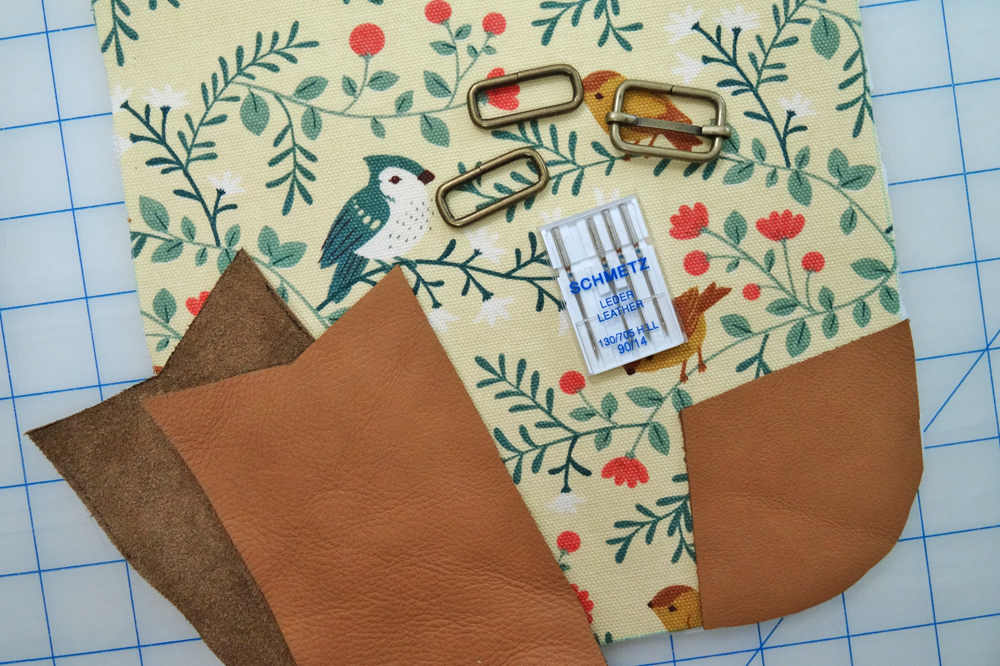
I chose to make a super thick canvas and leather layered mini Forest Glen Satchel to test the Skyline S7 this week. Lucky for it, it performed beautifully! This mini version of my satchel pattern has been in the works for a few years now and I’m finally on the home-stretch and hoping to re-release the pattern to include both sizes before the summer.
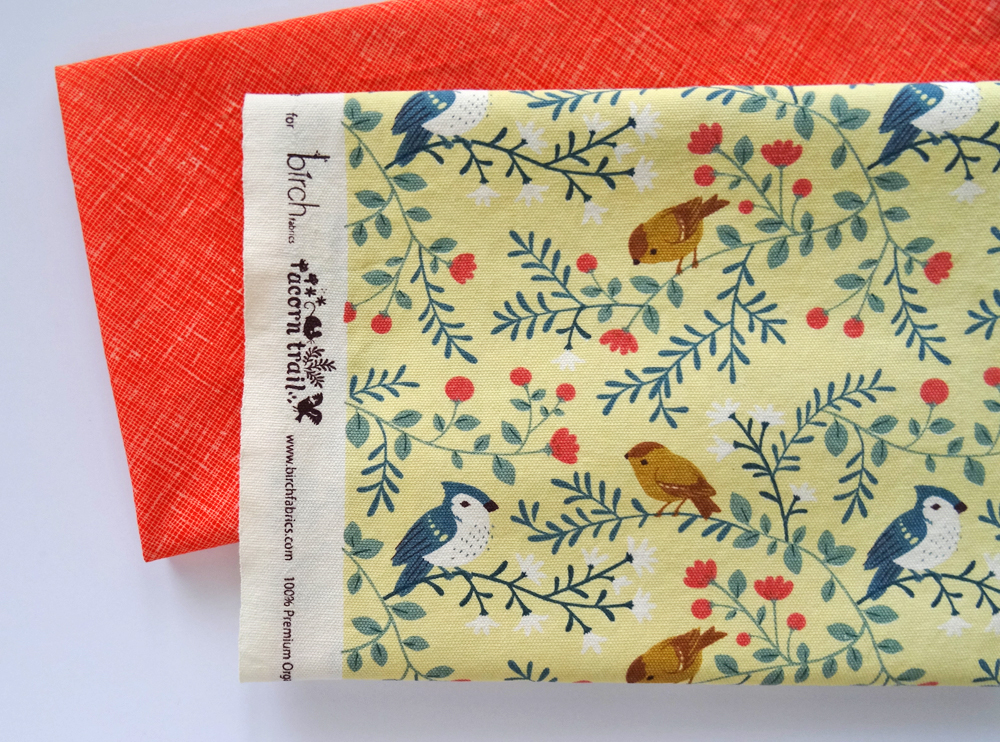
This mini Satchel is sewn from a gorgeous mix of organic Acorn Trail Canvas from Birch Fabrics and Carolyn Friedlander’s Architextures in Poppy. Both from my Canadian sponsor Mad About Patchwork. The two go so well together, plus the added leather details make it look super professional. I’m so proud of the finished product. My kids and I will be fighting over this one for sure!
The things that we’ve sewn in the Diary project so far haven’t really needed a tension adjustment. Sewing machines come set to an average setting that is also found in your manual and usually marked on the tension dial. However, when you are working with thicker and thinner/specialty fabrics you may need to adjust the tension to get the best seam possible.
Step 1: Read your manual. I know, I say it every week – but it’s the best first step. What does your machine manual tell you about tension and the type of fabric you are sewing?
Step 2: Make sure you are using the correct needle. Use a denim needle for denim, leather needle for leather etc. and make sure it is changed often.
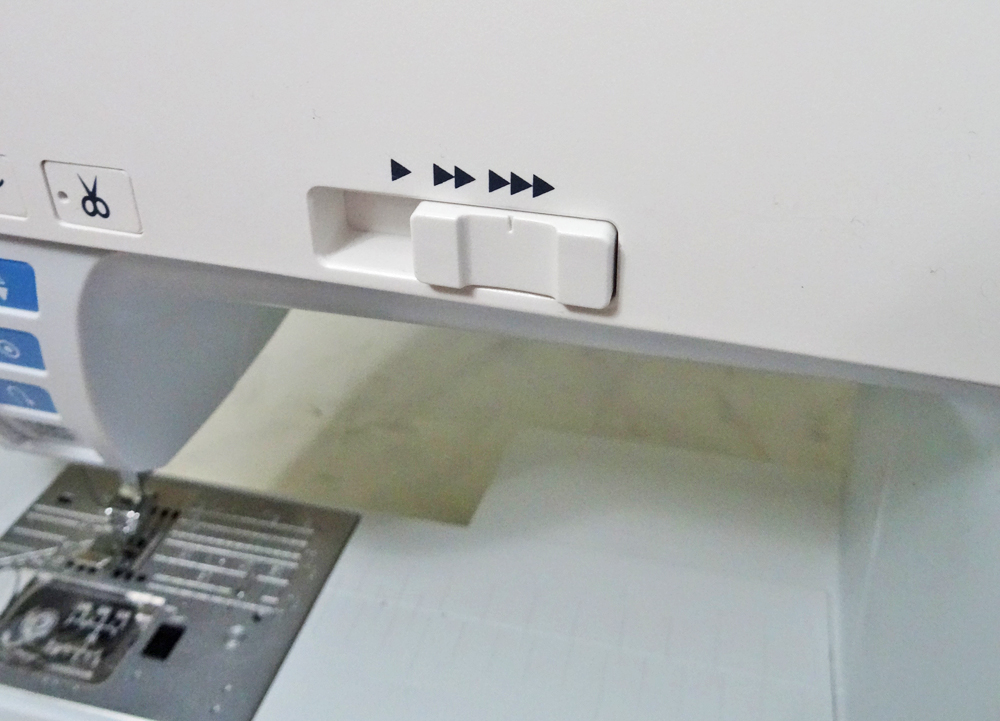
Step 3: Slow down. Make sure you are sewing at the correct speed for the fabric you are using. If you have a speed control slider like the Skyline S7 I’m using, notch it down a bit through heavier fabrics.
Step 4: Switch out your needle plate. If you have a straight stitch plate this can really help when sewing thicker or thinner fabrics. The plate has a small hole where the needle enters the bobbin area and will better support the fabric around the needle area as it is sewn, creating a cleaner stitch. The S7 has an included straight stitch plate and it’s really easy to change! I posted a video this morning so you can see it in action. #easypeasylemonsqueezy
Step 5: Check your thread. Make sure the thread you are using is recommended for your fabric type to avoid problems. I used regular polyester thread for the satchel and lots of other leather projects I’ve sewn and it’s held up fine. Do a little research to find out what’s best for you.
Now, make a test seam. Layer small scraps of the fabrics you will be sewing, including interfacing if needed, and stitch through them using the appropriate needle/speed/plate and thread. Try to pull them apart gently, if needed, to see how the bobbin and spool threads meet up. It’s easiest to see if you can do this with two different thread colours.
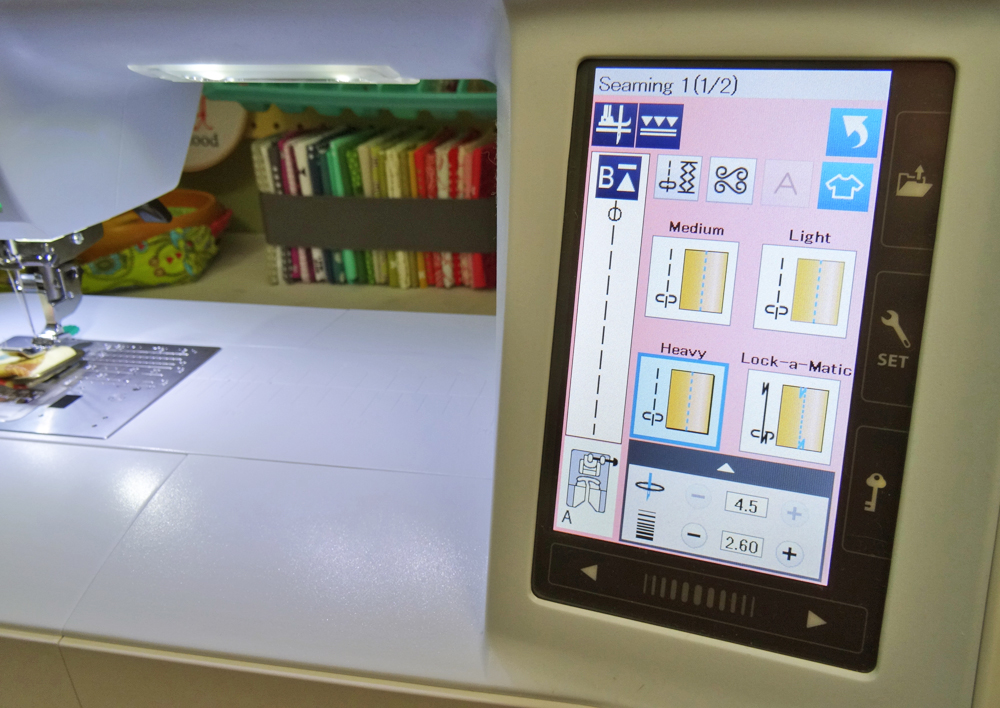
The photo above shows the test I made for the Satchel I sewed this week. Two layers of Canvas, two layers of leather and two layers of fusible fleece. The bobbin and spool threads meet right in the middle, and don’t seem to be pulling too little or too much. Granted, I may have cheated a little since the Skyline S7 has automatic computerized tension and a Heavy Fabric setting. Can’t complain about that!
What if your tension is not correct? Your machine will have a dial, button or screen where you can change the upper thread tension. Lower numbers loosen the tension, higher numbers tighten the tension. Here is a very simple guide on how to change your tension:
- Gathering or puckering? Your tension is likely too tight – loosen it by changing the tension to a lower number
- Loose or missing stitches? Your tension is likely too loose – tighten it by changing the tension to a higher number
Just like in science class – change one variable at a time. Don’t tighten tension from 2 to 9 all at once. Change the tension a few steps and test each one as you go to find the perfect setting for your machine.
Hemming Jeans
Hemming jeans saves you a trip to the tailor and some cash, sounds good to me! Especially now that you know how to adjust your tension for the thickness of the denim.
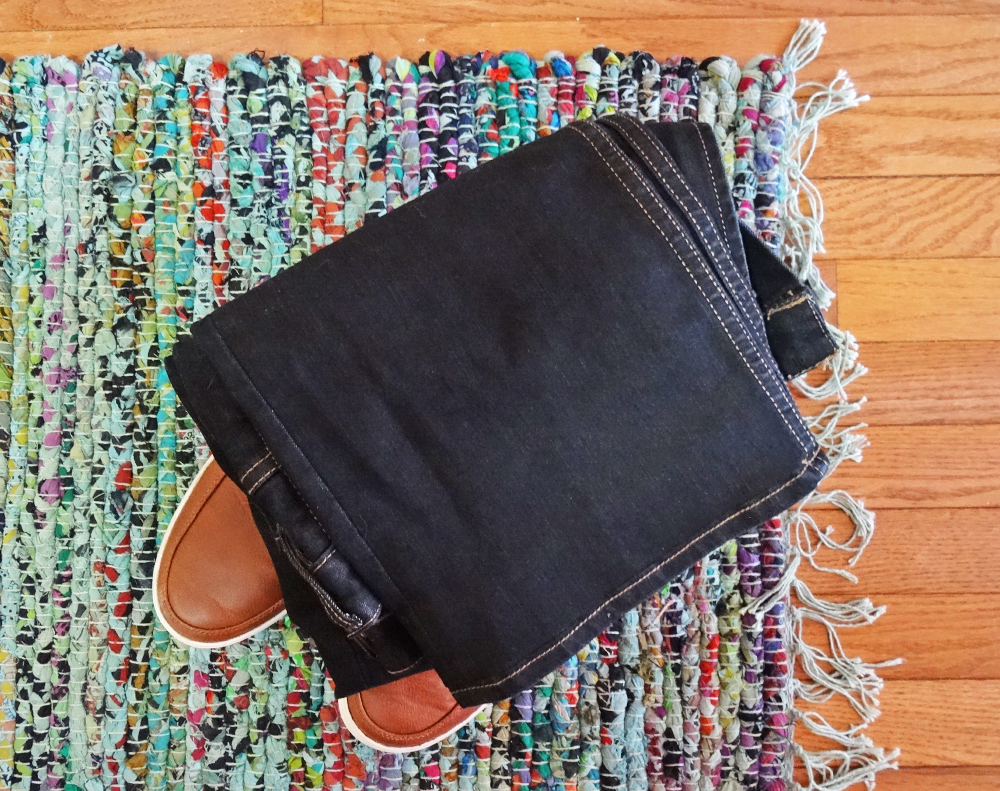
I generally hem my jeans leaving the original hem in tact. It took me about 10 minutes to hem my husband’s jeans last night, using the free arm on the Skyline S7 – all the more reason for me not to delay in the future! I can’t locate my original bookmark, but I did find one on my favorite fashion/sewing blogger’s site – Merrick’s Art. Here’s a tutorial on how to hem jeans while keeping the original hem. Of course there are more technically sound ways of doing this, but it works – and it’s quick – which is nice!
Mad about Patchwork has provided a discount of 10% off all orders until March 31, 2016!
Use the code TRH10 at the checkout to get your discount. Enjoy!
Mad About Patchwork is generously giving away a 3/4 yard cut of each of these gorgeous fabrics to one lucky sewist. I can’t wait to see what you will make with it!
This giveaway is open to everyone, internationally! From today (March 24th) until midnight March 31, 2016. Use the Rafflecopter widget below to enter – and if you don’t have Facebook to sign in with, just use your name and email address. There’s a “click to enter”, no social media login entry too!
a Rafflecopter giveaway
by Sherri Sylvester | Mar 21, 2016
Ummm… so maybe I went a bit overboard with this year’s Easter dresses! But before we get to that…
Last week was March Break with busy-ness and lots of fun. I was excited that we had a very manageable work week! It is SO encouraging for me that they are old enough to play more easily while I work. Less interruptions while “Mommy is working” means more efficient working hours for me and better-spent time with them!
Last week we managed to go to a Raptor’s D-league basketball game, take the kids out to Zootopia (super cute) and, after a warm photo shoot yesterday (thanks to the arboretum) we spent the day at the Royal Ontario Museum. Unfortunately, it has ended with a feverish little one in the house. Hopefully she will be feeling much better soon!
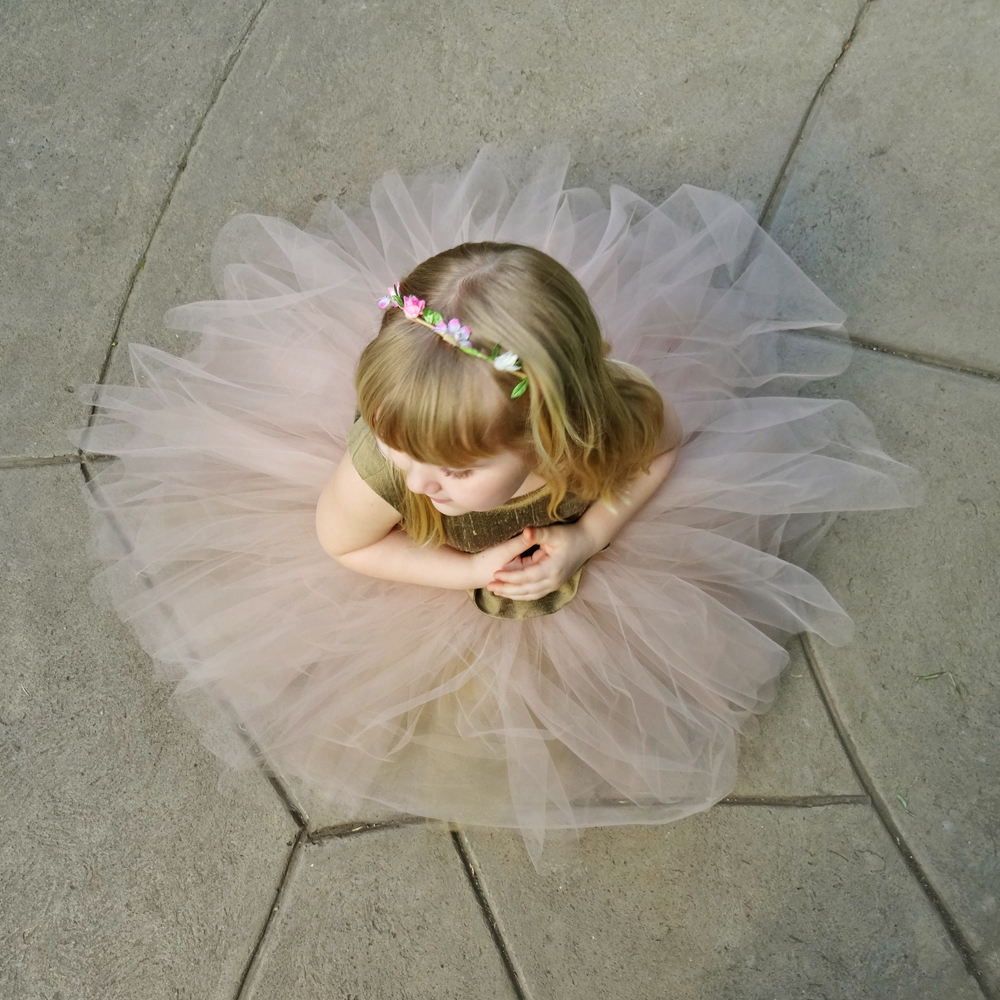
Back to Easter… these dresses are absolutely amazing, if I’m can say so myself! It’s not all of my hard work, but the pattern (and the girls!) that steal the show. These are made with the Violette dress pattern from Violette Field Threads. For the last two years I’ve gone to their patterns to make a special dress for each of the girls to wear on Easter Sunday. But I have to say, last year’s Annabelle dresses have nothing on these!
The construction is really simple, but I recommend that you save up your patience to sew them. I sewed two 9/10 width dresses and each one has about 43 yards of gathered tulle in the skirt! The gathering is a bit tedious, it took me about 3 hours to attach the first layer (there are 4 on each dress). Thankfully I learned and used a slightly faster way for the other layers and got through the last few more quickly – meaning about 45 min-1 hour each. I’ve collected a few tips from my experience below!
The fabrics I used for the bodices and peplums are super fancy “scraps” I had available in my stash. Pieces I couldn’t really make into anything else. My youngest is especially excited to tell everyone that hers is gold silk! The light teal one is a bit sparkly as well, but I’m not sure what the fabric is. It is really nice to work with, though and does not wrinkle easily.
The tulle was tricky because I couldn’t find an exact match for the bodice fabrics and had to get creative. Rose pink for the gold dress with one gold bottom layer, and mostly sparkly silver with one cream top layer for the teal dress. The lining is long enough that these dresses aren’t scratchy which is nice. I was worried the girls would complain about that.
I think I would make this pattern again, but maybe with a fabric skirt. The instructions for that are included and are a little less involved! This is a really cute dress though and I love the wider front neckline and lower back with two buttons. Only word of warning is keep your tulle away from anything stickery, like Velcro. My oldest now has a few holes in the top gathered layer that we are going to creatively fix before Sunday!
8 Tips for How to Sew Insane Amounts of Tulle More Quickly!
1) Leave plenty of time to sew. Be patient and don’t expect to rush. Each tulle layer takes between 1/2 hour and 1 hour to sew. Find a good podcast or Netflix show to distract you and JUST-KEEP-SEWING!
2) Clear off the work area near your sewing machine. Tulle yardage takes up a lot of space and it is not fun to stop and catch falling notions and collect small threads from your tulle. Trust me, they stick really well!
3) Fill at least 4 bobbins before beginning so they are ready . Then you won’t have to switch tasks or re-thread your machine as often.
4) It is helpful to mark the centre of the tulle before sewing so you can match up the gathering properly to the lining. It would be amazing to do this while you are buying the tulle, otherwise you need a really long hallway to cut it into lengths properly. It would be great to buy your tulle already cut and labeled in the various layer lengths if your fabric store will do that for you.
5) The layers are made up of a back and a front skirt piece. It is helpful to sew only one side seam before gathering. The second side seam can be sewn after the gathering stitches are sewn.
6) It was most helpful to use dental floss to gather the tulle layers. I used my rolled hem foot to keep the floss in the center of a wide zigzag stitch. You can even stop every so often to gather up the tulle behind the presser foot. This saves space and yards of floss. I tried to use ribbon this way, but the floss was really effective, strong and slippery to gather more easily. And of course, BONUS – your project will smell minty fresh!
7) I gathered with a 3/8″ seam allowance and then placed the tulle according to the edge (not the gathering seam). This way you can remove the dental floss before going on to the next layer.
8) Pin, Pin and pin again! The more pins you add when attaching the tulle to the lining, the easier it is to sew. I pinned the previously sewn tulle layer first, then added the new one above it and pinned the tulle down flat there as well. Really helpful when you are arranging so many layers inside of your machine.
by Sherri Sylvester | Mar 17, 2016
Do buttonholes and zipper installations get you feelin’ like “Where’s my Velcro stash again?” Even if they don’t make you to run in the other direction, chances are with a new machine (or an old one!) there’s something you don’t know.
Welcome to Week 2 of the Sewing Diaries: the Closures Edition. This past week I’ve been learning about how to make buttonholes and install a zipper on the Janome Skyline S7 that’s been loaned to me. I think it’s the second most important thing to learn on a machine – unless you are a quilter, in which case I suppose it is not as vital and you could skip this week. WAIT! What am I saying? I’m a blogger and writing is my paycheck! Rephrase: “Always – Read – Every – Word!” #noskippingallowed
Disclaimer: A Skyline S7 has been loaned to me for the purpose of writing this series. As with all products I write about, I will always tell you my own honest opinion. I purchased and loved Janome machines long before they contacted me. Janome has not asked me to qualify my opinions in any way.
Depending on how complex your sewing machine is, there can be a learning curve to how each manufacturer has set up each process. Once you have made a a few buttonholes and installed a zipper I promise they won’t feel so foreign! I’ve included a round-up of tutorials for both buttonholes and zippers below so you can feel confident. As always, it is best to always check your manual, because machines vary so much.
Sewing Buttonholes
I started sewing my girls’ Easter dresses, which have a total of 43 1/2 yards of tulle between them! (Insane I tell you! *edit: They are finished! See the Easter Dresses here.) Anyhow, they each require two buttonholes and so this was a good opportunity to learn how to do it on the Skyline S7. The above photo has a button sewing foot in it as well – but since the buttons I picked have curved edges it wasn’t a good time to try it. I’ll have to post the process on Instagram in the future.
There are a variety of ways machines are set up to make buttonholes, and some basic models don’t have buttonhole feet as an option. I’ve had experience using a SUV1122, 2030QDC, Skyline S5 and of course the S7. My experience being limited to Janome’s (since that’s what I always purchase and love) is that these models all have a similar One-Step Automatic Buttonhole process. The thing that differs is the number of buttonhole shape options – and how you can change their sizes and how precicely they are sewn. Options range from 1 straight buttonhole option on the SUV1122 to 10+ options on the Skyline S7 depending on how you set it up. We also have a New Home 1/2 size for my youngest without a buttonhole option. I’ve included a tutorial for machines without buttonhole feet in the roundup as well.
The Skyline S7 also has a stabilizer plate that I haven’t used before, but really enjoyed. It is used when a buttonhole is near a thick hem or other seam, to hold the area flat. I tried to compare buttonholes with and without the stabilizer plate for you. Unfortunatly, I think both of these buttonholes need the plate because the right side of the top buttonhole got a bit stuck and when I tugged on it it made some wide stitches. Oops… that’ll teach me to always use the stabilizing plate! #loveyourseamripper I re-sewed the top buttonhole and it looks great now. (Here’s a quick Instagram video of the S7 Buttonhole process.)
I’m hoping to finish the dresses (read: gather 23 1/2 yards of tulle, sew them together, repeat for a second dress… argh!) and take photos this weekend, but it snowed last year on Easter and this weekend is looking pretty chilly. I’m going to have to get creative with the location! (* edit – they are finished! See the Easter Dresses here.)
Buttonhole Tutorial Round-Up
Here are some tutorials, including a video and one that doesn’t need a buttonhole foot! Through reading these tutorials, I learned that you can use Fray Check on your buttonhole to make sure the inside threads don’t fray. #genius
Buttonhole Without a Buttonhole Foot ~ Manual 4-Step Buttonhole ~ Automatic One Step Buttonhole ~ Video, Automatic One Step Buttonhole
Sewing with a Zipper Foot
Choosing a zipper project for this week’s post was a no-brainer. I’ve been wanting to make another Cat-Eye Zippered Pouch for a while now. I had a peek at the hashtag #cateyepouch yesterday and it is so fun to see what everyone is making. I am so flattered that you all like my free pattern!
I went with the obvious and used Lizzy House Catnap cat fabric for my Cat-Eye pouch! I love the combination of this wrinkly dobby linen with the smooth quilting cotton and a bright zipper. This pouch is destined to be my Kindle cover since I think it’s my new favorite… though, they are all my favorites. Oh well – what good is it to choose anyhow!
There are so many ways to install zippers, and even different zipper types. The capabilities of the S7 far exceed what is needed for this pouch’s super-simple zipper installation. No matter what type you choose, there is a tutorial somewhere on the interwebs for it. And chances are your manual will cover off how to make it work as well. I’ve included 4 types of zipper installations in the tutorial Round-Up below.
Specifically on the S7 machine, you can choose a lapped or a concealed zipper from the LCD screen. My zip wasn’t exactly either one, so I chose the Lapped Zipper, Right Side stitch to move the needle to the correct position. LOVE not moving the needle over by eye! Of course you can set it up manually as well, the preset buttons just take the guess work out of the process. Changing the foot was simple. My Janome machines all have “Easy Change” feet – just click the foot in and out of the machine. I used to need a screwdriver and generic zipper foot with my previous SUV1122 because it’s default “easy change” zipper foot is one-sided and wider than I liked, not as convenient for sure!
Oh, and don’t forget, zipper feet are also not just for zippers. Sewing close to thicker edges and using it to install piping and pompom trim are just a few other things you can use it for.
Zipper Tutorial Round-Up
I’ve tried to narrow down this round-up to general use zipper installations. But, I couldn’t resist adding in the one on how to match your fabric, it really is easier than it looks!
Basic Zipper Installation ~ Lapped Zipper Installation ~ Invisible Zipper with Video ~ Exactly Match Fabric Across a Zipper Opening
I hope you’ve learned a lot today! I’m having fun because this series lets more of my passion for making sewing easy and accessible out into the world! Please let me know if you have any questions and I’ll do my best to help you out.
Next Week we’ll be talking about Sewing Heavier Fabrics. I get to make an oldie (but goodie!) Follow along on social media to find out what it will be!
by Sherri Sylvester | Mar 15, 2016
My husband and I differ in the amount of closet space we need. Here’s a quick run-down.
Every time I purge my “half” of the closet and get rid of clothing, it results in my husband appropriating the extra space for himself. I am starting to wonder if leaving piles of decoy clothing around would be helpful in case I ever need more space!
The thing that I don’t understand is that a disproportionate amount of those clothes are graphic tees, sports t-shirts, jerseys or free tees from things like wing eating challenges. Things he’s not ever going to give up, but also does not really wear. Ack! They sit there, taking up space – and more importantly, being messy – since other wearable tees are mixed in with them. Not that I’m a perfectionist or anything – but I love me a tidy closet!
Thankfully, I was able to convince him we were able to compromise and he let me chop some of them up into a t-shirt quilt. #ifyoucantbeatthem #jointhem We managed to pare the pile down by 20 tees. That’s 14″ less clothing piled on our shelves (I know, because I just measured a stack.) Makes me feel even better about this project. But, of course, it’s been almost 2 years since I took these photos and we’ve accumulated a full closet again. Turns out I should have made him king-sized quilt instead of only a twin!
If you might possibly have the same shared-closet predicament in your family dynamics *ahem-yes?* I would recommend that this is definitely the way to go! It’s been our go-to downstairs basement blanket ever since it was finished. I think maybe it was my first ever “real” quilt finish. At least, it is the first-quilt I am most proud of. The photoshoot was fun too. There’s a great park in Oakville by the waterfront that has these amazing life-size moose and wolf statues. #verymanly for our manly t-shirt quilt!
I think I started this project almost 4 years ago now. I found a nice t-shirt quilt tutorial on Goose Tracks Quilts. It is simple, without drawings or photos, and well written. Right down to a link to finding your fabric yardage. The design is a straight-forward and beginner friendly t-shirt quilt with same-sized blocks and simple sashing. Appealing to my sense of symmetry and order! I pieced a few of the blocks together to include the front and back of the tee together. And added in some important patches on the back.
The hardest part about this quilt was quilting it on my old budget basic machine. My non-quilty self decided to use a heavy blanket for the batting and my husband wanted to back it in baby-wale corduroy “that reminded him of a Scottish tartan”. Add the weight of the tee’s, and the interfacing you need to keep them from stretching. It’s a wonder my arms didnt’ fall off! Right – and then after that I pieced the t-shirt leftovers together for binding… *oof* #novicequilter!
In the end, the heaviness is so nice to cozy up under, And I’m glad we got to keep some fun memory t-shirts mixed in with the crazy graphic tee’s. His U2 concert tees, designs he made for work and shirts we designed and inkjet ironed-on. Oh, and one of the five epic basketball jersey we naively decided to double-layer applique lettering on for a basketball tournament (What was I thinking? Well, we were dating… Moving on!) Now these memories are preserved as a quilt we use almost everyday. I should probably add a label.
I wanna know! What has been your favorite quilt project?
Disclaimer: My inadvertent throwing Matt under the bus has been fully approved by the spouse in question. 🙂