by Sherri Sylvester | Jan 30, 2017
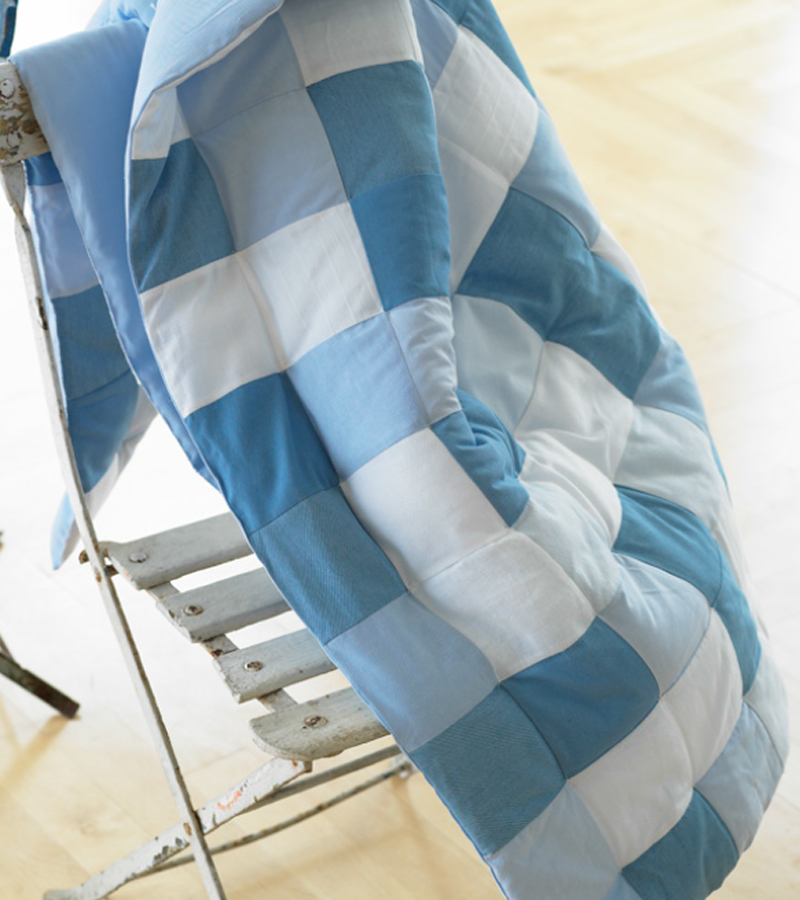
Since January is almost over (say what?!) I’m going to post my almost-to-last beginner-friendly post today. So far we’ve covered off some fun beginner stuff…
So… how about using those skills to make a fun project? I write for the Craftsy Sewing Blog – which is a great resource, and I’m not just saying that because I write for it! In addition to selling classes, Craftsy also publishes a sewing blog with informational articles, quizzes, freebies and more. Lots to do and learn there! (+ they have a Quilting Blog, and one for knitting, baking, art…)
Anyhow, (tangent over) I wrote a round-up article recently with 12 free beginner-friendly projects and I thought I’d share it here. Of course, I’d be remiss if I didn’t gently remind you all of some of the beginner sewing projects I’ve written too, though I am not great at self-promotion. (It just feels weird!) Here are a few things you might like, with the link to the 12 free Craftsy patterns at the bottom.
These patterns aren’t just for beginners! They make a great quick project for an experienced sewer.
Oh… and a quick plug for the very Beginner Friendly Fat Quarter Skirt pattern – since I’m right in the middle of finishing it up. It’s going to be released this Wednesday, February 1st and I can’t wait to show you the cute, cute tester photos I’m staring at right now. Be sure to follow me on Instagram or Facebook so you won’t miss the pattern release!

What is your favorite beginner project or pattern?
by Sherri Sylvester | Dec 13, 2016
What do you think of my new workwear?! Great, right? *Kidding* (of course), but that’s what I feel like they should be! I’ve been wearing these lounge/pajama pants every day since I finished them. This flannel is hands-down the coziest and warmest fabric I have ever had the pleasure of sewing with.
After school today I was out shopping for stocking stuffers with my kids. It is finally acting like winter around here, we even got about 5″ of heavy snow recently! Dark had settled in when we got home and we were all feeling a bit chilled. I went upstairs to change into my new pajama pants, and (I kid you not) I was warmed up in minutes. They really are as fluffy and thick as the photos look. My oldest is asking for her own now!
Sylvia from Country Clothesline and I worked together to bring you this new tutorial today. Adding cuffs to a pair of pants is a quick and simple project. Dress up your handmade pajama pants or add cuffs to a ready-made pair!
This fabric sells out fast! But you can find links to all of these re-stocked Mammoth Flannels below, available as of today. They are 100% cotton, yarn-dyed and double napped + it’s so soft to wear and washes up beautifully. I almost think I should have made a full-body onesie complete with feet and a hood – I’d never be cold again!
Sylvia’s usual selection of fresh and pretty fabrics also provided the contrasting cuff. It was so hard to choose from the three she sent over. After a ton of consideration, the paisley won out.
Country Clothesline Shop News
- All the Christmas fabric is now 40% off while it lasts and in store.
- Just in time for Christmas gifting – Gift Cards are available! Purchase and use them at the 471 Coburn shop in Toronto.
I’m also super pleased to say that I’ll be teaching classes at the Country Clothesline and Fabric Spark’s Toronto brick & mortar location in the New Year. Can’t wait to meet more of you, lovely readers!
DIY Pant Cuff Sewing Tutorial
These cuffs are a great contrasting addition to make a simple pair of pants more special. They use about a 1/4 yard of fabric, so you can probably even make them from a fat quarter!
This tutorial will make cuffs for any size you need. I used my favorite Ladies’ Harem & Lounge Pants pattern for the pants. This is my third pair – it’s great to have a well-fitting go-to pattern!
- Pre-wash and sew your pants according to the pattern, omitting the leg hem. (Or add cuffs to a ready-made pair.) Try the pants on and mark your desired length. Add 1/2″ for cuff seam and cut off the excess.
- Calculate your cuff size. Cut 2.
- Cuff Height = Double your desired height + 1″ for seam allowances
- Cuff Width = Double the Pant Leg Width + 1″ for seam allowances
- Place each cuff RST, matching the short side seam. Stitch with a 1/2″ seam allowance. Overedge stitch, zig-zag or use pinking shears to finish the raw edges.
- Turn and fold the cuff so the wrong sides are together and raw edges are matching, press. This will create a tube.
- With the pants inside out, place the tube over the leg opening, match the raw edges and pin. The cuff seam should line up with the inner leg seam on the pants.
- Stitch the raw edges with a 1/2″ seam. Overedge stitch, zig-zag or use pinking shears to finish the raw edges.
- Turn the pants right side out. Press the cuff seam allowance toward the pants.
- Fold the cuff up along the seam line and press.
- Tack the cuffs into place with a few stitches along each side seam to keep them in place.
- Press well. Done!
Enjoy your new pants!
——————————————————————-
I’d love to see your project! You can share your project on Facebook, Twitter or Instagram (links below) using the hashtags #alongforthreadride and/or #threadridinghood. Thank you!
This is a sponsored post. All content, opinions, and ideas are my own.
by Sherri Sylvester | Nov 29, 2016
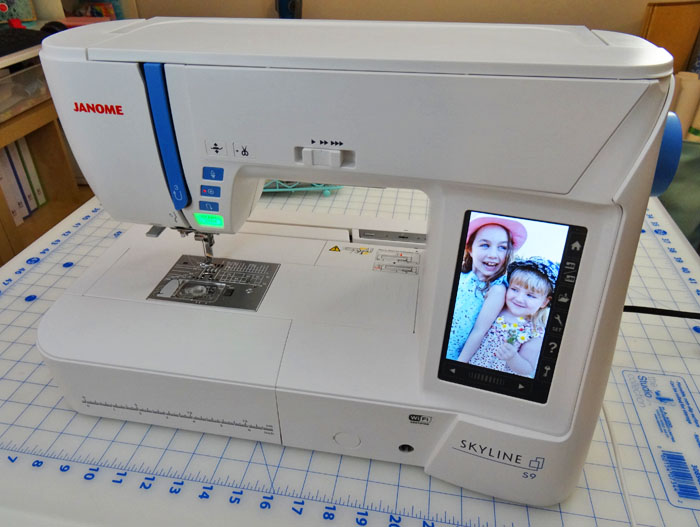
Dear Diary, Week 2 of playing with the machine embroidery functions on the Janome Skyline S9 has been so fun! I’ve written a brand new beginner friendly tutorial for a simple lined Drawstring Backpack today. (Plus have one very happy girl who gets to use it!) This bag makes a quick gift and you don’t need an embroidery machine to sew one up.
This post is sponsored by Janome Canada.
Ever since Janome asked me to be one of their Artisans I’ve had the amazing chance to try out their Skyline series machines. I’d love so much to be able to let you try them too – but I’ll have to settle with telling you about them instead. Through today’s free Backpack tutorial I’ll be showing you the Skyline S9 – just released a few months ago! Here are a few exciting features I’ll be highlighting:
- Tapering – automatic settings to create unique designs with decorative stitching
- AcuSetter app – Amazing super-simple to use Apple app designed to allow for crazy-exact embroidery design placement. Check out the machine embroidery section of the tutorial for more details. (Trust me, I was grinning like crazy when I used it!)
The Sewing Diaries: Embroidery Edition started last week with an introduction to how machine embroidery works with videos and lots of photos.
On with the tutorial…
Why a Drawstring Backpack? My 4th grader needs a change of clothes for gym class and asked for a bag to put them in – the perfect project for some machine embroidery and embellishment! She chose the design and the colours. (Still enamoured with pink!) I would have loved to use another Anna Maria Horner butterfly design in blue, pink and teal…. but you don’t argue with the 9-year-old. I’ve learned that she loves things she designs. When I don’t ask and make the decisions, handmade items tend to sit around unused.
Drawstring Backpack Tutorial
This lined backpack is easy to make and wear. It lends itself to all kinds of fabrics and embellishments – machine embroidery, hand stitching or applique! Of course you could use that gorgeous fabric you’ve been saving and skip the extras too. Using only 1 yard of fabric in total, the finished size is about 17″ x 14″. The straps are fully adjustable to fit anyone from a child to an adult.
This tutorial will assume you are machine embroidering your backpack. You can also add your own embellishments, omiting the parts of the tutorial that you do not need.
As usual, please feel free to use my patterns/tutorials for your personal projects and gifts and for charitable fundraising events. Please do not sell anything sewn with this pattern. If you are interested in making this item for sale, please contact me and I will set up a license for it in the shop. Thank you!
Materials:
- 1/2 yard/metre outer fabric
- 1/2 yard/metre lining fabric (I used outdoor slicker fabric I had on hand)
- 160″ total (about 4 1/2 yards) 1/2″ ribbon, clothesline or double-fold bias tape
- Two 1″ grommets
- machine embroidery supplies such as stabilizer, appropriate needles, and thread
Prep and Cutting:
- If you will be washing this bag, prewash and press it before beginning to avoid shrinking the fabric later on.
- Cut the outer and lining. You will need one piece cut to 30″ wide by 18″ high.
- Prepare the straps by cutting your bias tape/ribbon or clothesline rope into two equal pieces 80″ long each.
- Mark the outer fabric as indicated below:
Buttonhole:
- Stitch a 3/4″ buttonhole in the area indicated on the diagram above. This will be where the straps feed through the casing.
Decorative Stitching (with the tapering feature!):
My girl loves frills and so I decided to add some stitching near the top to simulate frills and lace. Just to make it prettier!
- Choose your stitches. I wanted to play with the tapering feature on the S9. You can choose from any of the purple marked stitches on the machine and it will automatically taper the stitching for you using several angles. This would be great for the ends of collars or a tapered space like the angle on a sash.
- Mark a line on the bag outer that is parallel to the top of the bag – you will use this to keep your stitching straight. Add a line of stabilizer behind your stitching line. This will not show, so you can use any type you’d like.
- Set up your stitches. I chose an heirloom stitch with a 30 degree angle on each end to make the stitching look lacy and “ruffled”.
- Begin stitching and the S9 will automatically taper the beginning of the stitch. When you wish to start the ending taper, press the auto-lock button.
- The machine will memorize the stitched length and ask you if you’d like to repeat it. I used this repeat function to stitch to the other side of the bag.
- I added a few other stitches. It was really handy to attach and use the guide bar to keep everything straight.
- Here are the finished stitches, along with a few practice ones I made.
Machine Embroidery (using the AcuSetter app):
- Choose and set up the design you would like on the machine.
- Mark the center of your design on the fabric and hoop it. I did not center the hoop on purpose to show you the AcuSetter app. This app is free for Apple users – and Janome loaned me an iPad mini so I could use it. It’s absolutely amazing!
- “Recieve” the design from the machine – it will show up right on your screen!
- Take a photo of the hooped fabric within the app. Match up the small black lines using the magnifying circle in the center.
- The design from your sewing machine shows up on the photograph for reference. You can move things around and resize it if you want! I tilted the heart and lined it up the center markings I made earlier.
- Send the design back to the machine. It is automatically precicly placed exactly where you want it!
- Run the machine to embroider your design. This heart took about 19 minutes + threading time and has 7 different colours!
- Adding a Monogram exactly where you want is easy with the same steps. Program the monogram, hoop the fabric, receive the design, line it up and send the design back to the machine. Now, embroider it in the exact place you put it!
Sew the Backpack:
- Change the machine from Embroidery mode to Sewing mode. Press the toggle button on the LCD screen and close the embroidery arm.
- Match the top edge of the outer and lining with right sides together. Pin and stitch with a 1/4″ seam. Finish the raw edge if desired with serging, zig-zag stitch or pinking shears.
- Open flat and press the seam allowance towards the lining. I used low heat because the slicker fabric melts easily.
- Fold the lining and outer right sides together matching the sides and the seam you just sewed. The outer and lining sides will match up with themselves. Stitch with a 1/2″ seam and finish the raw edges if desired.
- Fold the lining into the outer with wrong sides together, creating a tube. Press and pin along the finished seamline and match the bottom raw edges.
- Edgestitch along the pinned edge about 1/8″ away from the fold. Also stitch along the pre-marked line (aprox. 1 1/4″ down from the top edge) to create the casing.
- The buttonholes should be centered from top to bottom within the casing.
- Turn the bag wrong side out and align all 4 raw edges. Flatten and pin the bag bottom with the back seam centered on the back of the bag. Stitch through all 4 layers with a 1/2″ seam. Trim to 1/4″ and finish the raw edges if desired.
- Turn the bag right side out again. Push out the bottom edge and the corners and press well. Mark 2″ out from each corner and connect the lines to create a triangle in each corner. Also mark a stitching line 1/2″ up from the bottom fold. Stitch on the marked lines to enclose the raw edge and create a sturdy corner for the grommets.
- Attach the grommets in the center of each stitched triangle as per the manufacturer’s directions.
- Insert one strap through the right buttonhole, around the entire casing and out the same buttonhole. Match the right side strap ends and bring them through the grommet from the back. Knot to hold in place.
- Insert the other strap through the left buttonhole, around the entire casing and out the same buttonhole. Match the left side strap ends and bring them through the grommet from the back. Knot to hold in place.
- Fray-check or finish strap ends if desired. They can be re-knotted at any length appropriate to the wearer. Remove all markings and press well.
Enjoy your new Drawstring Backpack!
——————————————————————-
I’d love to see your project! You can share your project on Facebook, Twitter or Instagram (links below) using the hashtags #alongforthreadride and/or #threadridinghood. Thank you!
by Sherri Sylvester | Nov 21, 2016
I am in the middle of a sewing journey. One that begins with me not knowing anything about machine embroidery – and ends with me (hopefully) knowing better what I’m doing and sharing tips and tricks with you along the way.
As with all good journey’s this one includes a diary – so the explorers that went before can share their experiences after they have moved on to the next place. Overly dramatic, I know, but I think it works! (hee hee)
This post is sponsored by Janome Canada.
I’m treating this 3-part series as a diary of the good, the bad and the seam ripped. I’m sharing all my mistakes, things I should have done, tips for next time and the successes too! Along the way, we will learn a lot about machine embroidery together. You can also check out the Sewing Diaries – Get to Know Your Machine posts if you want more sewing machine information.
As a very honest aside… I know many of you do not have an embroidery machine. I understand that and will highlight sewing tips as well. (Including a brand new sewing tutorial next week.) If you are curious about how machine embroidery works, there are behind the scenes photos and video links!
Hello, My name is Skyline S9… Janome Skyline S9.
Ok – it’s not quite James Bond, but it comes pretty close! This combination sewing/embroidery machine has everything a maker could ask for and lots more I’ve forgotten to mention or don’t know about yet! I featured the S9 a bit in the Maker Style posts this October, but I should give you a proper introduction.
Basic Machine Embroidery Supplies
To start embroidering you will need some basic supplies.
- Embroidery Thread & Bobbin Thread
- Needles – Blue and/or Red tipped Janome needles are recommended for the Skyline S9 machine
- Stabilizers – one of about a zillion types!
More about Stabilizers…
This extra layer (or two) is used to stabilize the fabric you are embroidering. They give it more rigidity and strength, and allow the weave to hold the threads better.
I have so far liked the dissolving stabilizers since they are easy to remove and I have been making items where the back will show. This article from Threads magazine has lots of really useful information about how to choose the correct stabilizer.
Rule of Thumb: If you have a loose weave fabric or a more dense embroidery design you will need a stronger stabilizer (or more layers of a thinner one) OR If you have a dense weave you can get away with less/thinner stabilizer.
Where to Start + Some Beginner Tips
The best advice I got was to practice, practice, practice! Linda Pidzameky (from Janome) told me to start embroidering all of my dishtowels – and it’s the best advice I got. The easiest way to learn how to machine embroider is by trying it and making mistakes and trying it again.
I used an Anna Maria Horner design that looks like cross-stitch and one layer of Janome Aquasolv as the stabilizer. Since the towel fit in the embroidery hoop, I cheated and adhered it to the towel with my quilt basting spray – which seemed to work just fine!
For comparison, I also decided to embroider another dishtowel with a different design and a different stabilizer. This time I used the Unique Rinse Away I picked up at my local fabric store.
If you are curious what machine embroidery looks like, here’s a quick video I put on Instagram!
What I learned:
- The dense stitching on the “S” monogram took about 34 minutes to embroider, despite being the same size as the AMH Cross-Stitched design. The AMH embroidering took about 11 minutes.
- Both stabilizers worked well and held up great.
- It would have been good to use a top layer of stabilizer. Called a “topper”. It’s clear and disappears after the design is washed. The topper helps to hold the stitches out of the fabric weave – which is showing through the monogram a bit much for my liking. I used a topper on this towel for comparison. You can see that the stitching isn’t affected by the plush towel fibres.
By the way – the Janome Aquasolv won by a long shot! (See the photos below) My Unique Rinse Away barely disappeared. I’m hoping it will go away with more washes.
Learn from My Mistakes
My mom has a saying we use whenever one of us does something “less than smart” – we call it “dumb things I have did”. I feel like that is a good title for this section!
- Start with the Basics:Umm… what size is that design again?
- I actually managed to start embroidering the “S” monogram onto my dishtowel before I realized it was about 4 1/2″ tall! Somehow I thought it was much smaller. Oops! *face palm*
- Think it Through:Smarter stabilizing!
- I used a tear-away stabilizer for part of my Design Diva Apron embroidery. Turns out it’s a lot of work removing all those tiny pieces! Might have been simpler to use a wash-away version.
- Turn it Over:What will it look like when they see the back?
- Colour the stabilizer and bobbin to the colour of the back of your fabric. Seems like a no-brainer, but I didn’t figure this out in time and the back of my Design Diva apron has white bobbin thread and white stabilizer on navy. Argh. This also would have been a good place for a better dissolving stabilizer!
- Baste for Success:Right, until you try to remove them!
- Trust me, I know from experience! It’s much simpler to remove the basting stitches from the back than the front. The automatic tension is much looser on the back so they come out way more easily.
- Desk Depth:Check the size of your furniture!
- I just built a new sewing space, and it happens to have an 18″ deep area for the machine. Which is perfect, until your embroidery arm needs a 24″+ depth to work. Thankfully I can run the machine from my cutting table. No harm done.
Funn-est Thing of the Week
Random fun fact about the S9? LOVE that you can change the screensaver to whatever photos you want. Which means, wait for it… the sewing machine HAS a screensaver! And I changed the photos over wifi!
Wanna know what photos I used? You can find a video of it on Instagram!
Never in my life thought I’d be using a sewing machine with a screensaver and a wireless connection to anything. My tech-savy husband also thinks that’s awesome and gives it a thumbs up! (Plus he’s plotting planning all the things I can now embroider on his friends’ Christmas gift bags!)
by Sherri Sylvester | Oct 20, 2016
Just back from a trip to the thrift store? Got 7 shirts in your closet waiting to be upcycled? Scraps from previous re-purposed items still to be dealt with? You’re in luck! Today is all about our last Maker Style – the Eco Expert! Projects include your personal Eco Expert apron, new repurposing projects to try, clever ways to use old clothing and how to make them unique.
This post is sponsored by Janome Canada.
How do you know if you are an Eco Expert?
Take my super fun short quiz to find your personal Maker Style! Don’t miss out on lots more great sewing inspiration, grab a cup of tea and sit down with the new M Series look book from Janome. I really enjoyed looking through it, the project tips and tricks are great and there are free patterns too!
Eco Expert Utility Apron (+ How I Shopped for Thrifted Fabric)
The Eco Expert apron is based on a tutorial from Sugar Bee Crafts. Their Utility Apron is easy to sew and requires minimal yardage – perfect for re-purposing your old or thrifted clothing!
I went thrift store shopping and found 3 skirts. All made from heavier fabrics, since I wanted this apron to be durable. The skirts I chose had various things I wanted to incorporate: denim – because of its durability, skirt tab – a fun detail to use in a new way, and great top-stitched seams – to add detail to the finished apron.
Always check to make sure they don’t have any stains or tears (though you could use that to your advantage too!). To save myself a bit of work I took the tutorial measurements and a measuring tape with me so I could be sure the skirts had enough fabric to fit.
Creative Up-Cycling (Anything is fair game!)
Here are a few ways you can use ready-to-wear clothing details to make your up-cycled project better!
|
Upside Down Hems: The tops of all of these apron pockets are the hems of each skirt. It was really simple to turn the skirt upside-down and cut the pieces out.The pink skirt had a bit of a curve to the hem and I was able to use that as a design feature! |
|
Everything Has a Purpose: The pink skirt had a cute faux-button tab on the waistband. I was able to remove it and re-sew it to the skirt side to use as a scissor holder! |
|
You Haven’t Seam it All: #seewhatIdidthere? Sorry for the joke – but the pre-sewn seams can add a fun detail to your up-cycling! I off-set all three skirt seams to add interest to the apron. Bonus: You won’t have to sew all that extra topstitching! |
|
Stitch it Again: On the topic of seaming things. I had to re-stitch the hem on the pink apron. It had a pleat in the back and to remove it, the hem had to be un-stitched.To make things more fun, I used my favorite “X” stitch that comes on the Skyline and M Series Janome sewing machines. Just grab the F or F2 Satin Stitch foot and stitch right across where the old hem was topstitched. |
|
Re-Use the Pockets: This is a common one. Take the pockets off your jeans and use them in your new project. Again, all that work cutting and topstitching is already done for you! A great example of this is to use one on the lining of my new favorite purse pattern – the Chobe. (Photo via Elle Puls, via Stitchydoo) |
|
Use Plain Space: Ok – this is stretching the use of “ready-to-wear details” a bit, but lettering is so fun! If you use some blank space to add a fun detail like the I did with the word “MAKER” here. Again, this alphabet is available on the Janome Skyline S7 I used to stitch this apron, and the new M Series machines.BONUS: If you have some pre-loved leather around, you can make a simple Leather Label too! |
You can find more ways to embellish your sewing in the Sewing Diaries: 9 Ways to Embellish and Label Your Projects.
Re-Purposing Projects to Try
I’ve found some great up-cycling sewing projects you can try. The quilts are the best since you can destash and a lot of fabric all at once! If you like these and want more, you can follow my UpCycle or Alter Pinterest board. (Made with Eco Experts in mind!)
Hope you had fun visiting today. What is your favorite Upcycling Project? Be sure to follow #alongforthreadride!
by Sherri Sylvester | Oct 7, 2016
October is Embroidery Month! Scary?… Embroidery sounded hard to me hard, and confusing, or at least made for people who put sayings or licensed characters on everything. Turns out it is so much easier than I thought – and fun to play with – which I found out since being loaned the Janome Skyline S9 sewing and embroidery machine. (P.S. Keep reading to get a free apron pattern and tutorial below. Or click on one of the photos to pin it for later!)
This post is sponsored by Janome Canada. I’m part of a group of Canadian Janome Artisans. Thank you for reading!
Coming Soon! In mid-November, I’ll be writing a more detailed series about embroidery – the Sewing Diaries: Embroidery Edition – tips/tricks and my honest newbie experience using one of these “scary machines”! (Including a list of things I should have done when embroidering this apron and didn’t…)
If the Sewing Diaries sounds familiar, it’s because this spring’s Sewing Diaries: Meet Your New Machine series was similar. If you haven’t read it, take a look. Lots of good general information about getting to know your machine, and how to sew almost anything on it!
Last week‘s installment of “What’s Your Maker Style?” included a super-fun short quiz where you get to choose your favorites from photos of sewing things to find out what your Maker Style is. If you haven’t tried it yet, click on the photo below! (Don’t worry, we’ll wait for you to come back!)
For all the Design Diva’s out there – this post is for you!
This apron was made to highlight the embroidery options available on the Skyline S9. Inadvertently, I also highlighted it’s sewing abilities. Since it is a 2-for-1 machine, and you can switch from sewing mode to embroidery mode with the touch of a button – literally! (On it’s pretty full colour touch screen, I might add… eeep!)
The original Design Diva Apron was made from a nice springy palette of magenta, florals and navy. The tutorial version is a little more autumn-friendly with a pretty wine coloured sash, boho pockets and navy skirt. Plus of course I made it more fun with lots of embroidery, including one of many exclusive Anna Maria Horner designs and my personal monogram. (Couldn’t resist!)
Design Diva Apron Tutorial
As usual, please feel free to use my free patterns/tutorials for your personal projects and gifts and for charitable fundraising events. Please do not sell anything made with this pattern. If you are interested in selling aprons made with this pattern, please contact me or leave a comment and I will make a Seller’s License available for purchase in my shop.
Sizing:
The Design Diva Apron is *almost* a full circle skirt of ruffled goodness, the wide waistband and wrap-around sash add to the fun! This free apron pattern is one-size-fits-many and all seams are finished with a simple French Seam.
The entire apron waist measures about 34″. The back of the apron is open to allow it to fit a greater number of sizes. The sash is about 118″ long and can be tied in the back, wrapped around the front to tie in a bow or a knot to fit the wearer best. This apron is about 21″ long.
Materials:
Quilting Cotton works great for this project, along with twill, linen and other lightweight woven fabrics. The materials listing is based on 42″ wide fabric (pre-washed) unless otherwise specified.
- 1 yard Main Apron Fabric
- 1 yard Sash Fabric
- 1/2 yard Pocket Fabric
- 4 yards Ruffle Binding (I used 1 1/2″ wide.)
- 1 yard 20″ wide Medium Weight Fusible Interfacing (ie. Pellon SF101 Shape-Flex)
- Matching/Contrasting thread for Edge-Stitching
- Removable Fabric Marker
- 2 Safety Pins
- Chopstick
- Your regular sewing supplies
- Optional: Embroidery Machine, stabilizer and thread for embellishment
Before you begin:
- Print out all 12 pages of the Design Diva Apron Pattern Pieces pdf on letter size (8.5″ x 11″) or A4 paper. Important: Do not select “fit to page” when printing, make sure you print at the original size.
- Once you have printed the first page, measure the 1″ test square to ensure the pattern is the correct size.
- Cut each page on the outer gray lines and tape the pages together, matching the letters in the gray half-circles.
Cutting:
- Main Apron: Fold your fabric in half, matching selvage edges. Cut one Apron Front on the fold, and 2 Apron Backs as per the pattern pieces. Be careful, the yardage is tight, buy an extra 1/2 yard if you are worried.
- Apron Pockets: Fold your fabric in half, matching selvage edges. Cut 2 of each pocket piece as per the pattern pieces.
- Sash: There are no pattern pieces for the sash. Cut 3 pieces of sash fabric 9″ x 40″ each.
- Interfacing: There are no pattern pieces for the interfacing. Cut 6 pieces of interfacing 4 1/2″ x 20″.
Let’s Sew!
All seams are 3/8″ unless otherwise indicated. Be sure to backstitch at the beginning and end of each seam to secure your stitches. Press liberally throughout to ensure a professional finished product!
Embroider the Apron (optional):
Machine embroider your apron as desired. I chose to use an Anna Maria Horner design supplied with the Janome Skyline S9 machine. And embroidered them using Janome embroidery thread.
It was hard to choose which designs to use, there are so many I like! In the end, because the apron has a circle skirt and drapes a lot near the bottom, I chose to use a simpler flower design, using colours that complimented the fabrics in the apron.
The back needed to be monogrammed, of course! I chose to use a 3 letter monogram for my initals – literally took me all of 2 minutes to program into the machine. Pretty addicting – I “need” to monogram all of our towels now!
Tips: Remember, the front will be sewn to the back at the side seams. Since it is a circle skirt, be sure to angle your design or it will not be straight when you wear it. Plan accordingly if you want to tie a bow at the apron front, some of your embroidery may be obscured by the sash ends. Also, depending on the wearer, the back may or may not be overlapped.
Prepare the Sash:
- Match and stitch all 3 sash pieces right sides together along the short edges. Press all seams open. You will now have a sash about 119″ long.
- Fold the sash lengthwise with long edges matching and wrong sides together. Press well. Open and fuse the interfacing to the wrong side of one half (4 1/2″height) of the sash length as per your manufacturer’s directions. Overlap the interfacing pieces by 1/4″ so they cover the entire sash. The interfaced side will be the front of the sash.
- Fold the sash along the center line and re-press if necessary. Mark a point 4 1/2″ in m the end of the long raw edge. Draw a line from this point to the corner of the folded edge. Cut along this line, creating the shape for the angled ends of the sash. Repeat for the other end.
- Fold the sash in half and mark the center point (yellow pin). Set aside.
Sew the Pockets:
- Match a Pocket Top right sides together with the pocket curve of the Apron Front. Pin and stitch along the small curve. Trim seam allowance in half.
- Flip and press the Pocket Top wrong sides together with the Apron Front. Top stitch the pocket with a straight stitch, or something fancier! I used an Heirloom stitch (#30) on the Skyline S9 to create a subtle cross-stitch in red along the edge.
- Fold the Apron Front out of the way and match a Pocket Bottom to the long outside curve of the Pocket Top with Wrong Sides Together. This will be the beginning of a french seam to finish the raw edges. Stitch the outside curve with a 1/4″ seam. Trim the seam allowance in half.
- Turn the Pocket Top and Bottom so they are Right Sides Together. Push out the seam and press well. Pin if desired and stitch the outside curve again, enclosing the first seam. You’ve now enclosed the raw edges and finished the French seam.
- Fold the pocket into place and baste the top and side edges with a 1/4″ seam to keep them in place.
- Repeat for the other pocket.
Sew the Side Seams:
- Match an Apron Back to the Apron Front at the side seam Wrong Sides Together. We will sew another French Seam to finish and enclose the sides of the apron. Pin and Stitch the Side Seam with a 1/4″ seam. Trim the seam allowance in half.
- Turn the Apron Front and Back so they are now Right Sides Together. Press well along the seam. Stitch again with a 1/4″ seam to enclose the raw edges. Press the French Seam towards the Apron Back.
- Repeat for the other side seam.
- Fold the apron in half to find the top center waistline. Press to mark it, or use a pin.
Finish the Hem:
- Sandwich the curved apron hem between the ruffled bias tape. Pin if desired. Stitch the tape beginning at the top of one Apron Back edge and ending at the other. Cut off any remaining bias tape.
Tip: This is another great place to use a fancy stitch if you’d like to. I used the same Heirloom stitch as I did to top stitch the pocket edges. This time in tone-on-tone white. It gives a nice hand-made vibe to the apron!
Attach the Sash:
- Measure out 19 1/2″ on each side of the center marking (green pin) you found on the sash. Mark each measurement (yellow pin). The area between these marks will be attached to the Apron along the waistline.
- Match the interfaced side of the Sash to the Apron Front with fabric right sides together at the center mark. Pin. Match the ruffled edge of an Apron Back with the 19 1/2″ markings you just made on the sash. Pin.
- Match and pin one side of the the sash to the apron waistline between the pinned areas. Repeat on the other side so the entire waistline is pinned.
- Stitch the pinned area from one side of the apron ruffle to the other. Open and press the sash away from the apron.
- Place a safety pin in each end of the interfaced area on the sash. This will make it easier to turn later.
- Place the apron right side up on the table with the skirt facing you. Roll the apron fabric up to the sash until you can see the waistline seam you just sewed underneath it. The rolled apron will be laying on the front half of the sash (interfaced). You may want to roll the fabric a bit at a time, since there is a lot of it.
- Match the sash sides right sides together at the center (enclosing the rolled apron) and pin.
- Measure 5″ on either side of the center pin and mark with another pin. The 10″ area between these two marks will be the opening and will not be sewn.
- Match and pin the remaining raw edges of the sash. Be careful to keep the rolled apron inside the sash and out of the way of the edges as you pin. You will now have a strange long fabric snake – it’s ok! We’ll make it look like an apron in the next few steps.
- Stitch along the pinned edges, leaving the 10″ opening un-sewn. Make sure you do not sew over the rolled apron! When sewing over the previous seam, try to sew just to the outside or directly on top of the seam, if possible.
- Clip the corners of the sash. Clip a large long triangle out of the end of the angle, to remove as much bulk as possible.
- Pull the apron out from the opening to turn the sash inside out. Use the safety pins to turn the sash ends. Be patient! It is a very long sash, but I promise – it will turn! Push out the angles with a chopstick. Push out edges and press well.
Finish the Apron:
- Press under 3/8″ along the sash opening. Pin.
- Edge stitch the sash, catching and closing the sash opening. I like to use my Janome blind hemming foot, just move the needle to the left and let the guide run along the edge of your fabric. Perfectly straight!
- Press the apron well, and you are finished. Enjoy!
——————————————————————-
I’d love to see your project! You can share your apron on Facebook, Twitter or Instagram (links below) using the hashtags #alongforthreadride and/or #threadridinghood. Thank you!